
Jowai (Jwai)
Updated 2026Heart of the Jaintia Kingdom & Myntdu River Valley
| Category | Detail |
|---|---|
| Altitude / Elevation | 1380m |
| Best Time to Visit | October to April |
| Coordinates | 25.4526° N, 92.2037° E |
| Distance from Shillong | 64 km (2 hours via NH6) |
| Nearest Airport | Shillong Umroi (60 km) / Guwahati (160 km) |
Jowai is the administrative capital locality of the West Jaintia Hills district in Meghalaya, situated at an altitude of 1,380 meters above sea level along the Myntdu River loop. Located 64 km east of Shillong and 160 km from Guwahati Airport, Jowai is celebrated for the turquoise pools of Krang Suri Waterfalls, ancient megalithic standing stones at Nartiang, and rich Pnar indigenous culture.
Cool mountain breezes drift over emerald river bends as the Myntdu River loops softly around Jowai's pine-clad ridges. Below the highland cliffs, turquoise waters shimmer in the sunlight at Krang Suri, while centuries-old stone monoliths stand silent watch over green Pnar paddy valleys.
No Inner Line Permit (ILP) required for Indian citizens visiting Jowai or Meghalaya.
Geography, Topography & Myntdu River Basin
Jowai is the administrative capital locality of the West Jaintia Hills district in Meghalaya, situated at an elevation of 1,380 meters (4,527 feet) above sea level on the central Meghalaya plateau. Located 64 km east of Shillong along National Highway 6 (NH6) and 160 km from Guwahati Lokpriya Gopinath Bordoloi International Airport (GAU), Jowai occupies a strategic high-altitude ridge overlooking fertile agricultural valleys.
The defining geographical feature of Jowai is the meander loop of the Myntdu River, known locally in indigenous Pnar lore as Ka Tawiar Ka Takan ("The Protecting Mother"). The river encircles the town on three sides like a natural liquid moat, carving a deep green valley before flowing south into the floodplains of Bangladesh. Beneath the high town ridge lies the expansive Pynthor Wah terraced paddy valley, where indigenous Pnar farmers cultivate traditional red hill rice watered by natural river channels.
Jowai features a temperate highland climate. Summer temperatures range between 15°C and 24°C, while winter nights can drop to 5°C. The surrounding hills are blanketed with subtropical pine stands (Pinus kesiya), oak-rhododendron woodlands, and riverine bamboo groves. The combination of high elevation, fresh mountain breezes, and abundant water basins gives Jowai a distinct microclimate compared to the warmer southern border gorges.
Pnar Indigenous Culture & Jaintia Kingdom Legacy
Jowai is the cultural and political epicenter of the Pnar people (also referred to as the Jaintias), one of Meghalaya's three primary matrilineal tribal groups alongside the Khasis and Garos. In Pnar tradition, lineage and ancestral clan property (Ri Kynti) pass down through the female line, with the youngest daughter (Ka Khadduh) serving as the custodian of the family hearth and ancestral rituals.
Historically, Jowai was a cornerstone of the ancient Jaintia Kingdom (Sutnga Chieftaincy), which flourished from the 16th century until British annexation in 1835. The Jaintia Kings ruled an expansive territory that stretched from the hill plateaus of Meghalaya down into the fertile plains of Sylhet (modern-day Bangladesh). The royal court maintained a winter capital at Jaintiapur in the plains and a summer seat at Nartiang in the hills.
The indigenous faith of the Pnar community is Niamtre, a monotheistic belief system centered on reverence for U Blei Wa Beh-Ryngkew (the Supreme Creator), ancestor veneration, and harmony with nature. The major cultural highlight of Jowai is the annual Behdeinkhlam Festival, held every July over four days. Devotees construct massive, intricately painted wooden and paper towers called Rots, which are paraded through the town with high-energy traditional drumming and immersed in the sacred Aitnar mud pool to banish sickness and invoke divine blessings for a rich harvest.
Jowai also holds a sacred place in India's anti-colonial freedom struggle. At Syntu Ksiar along the banks of the Myntdu River stands the memorial monument dedicated to U Kiang Nangbah, the legendary Pnar freedom fighter who led the Jaintia rebellion against British colonial taxation from 1860 until his betrayal and public execution at Jowai in December 1862.
Turquoise Plunge Pools of Krang Suri Waterfall
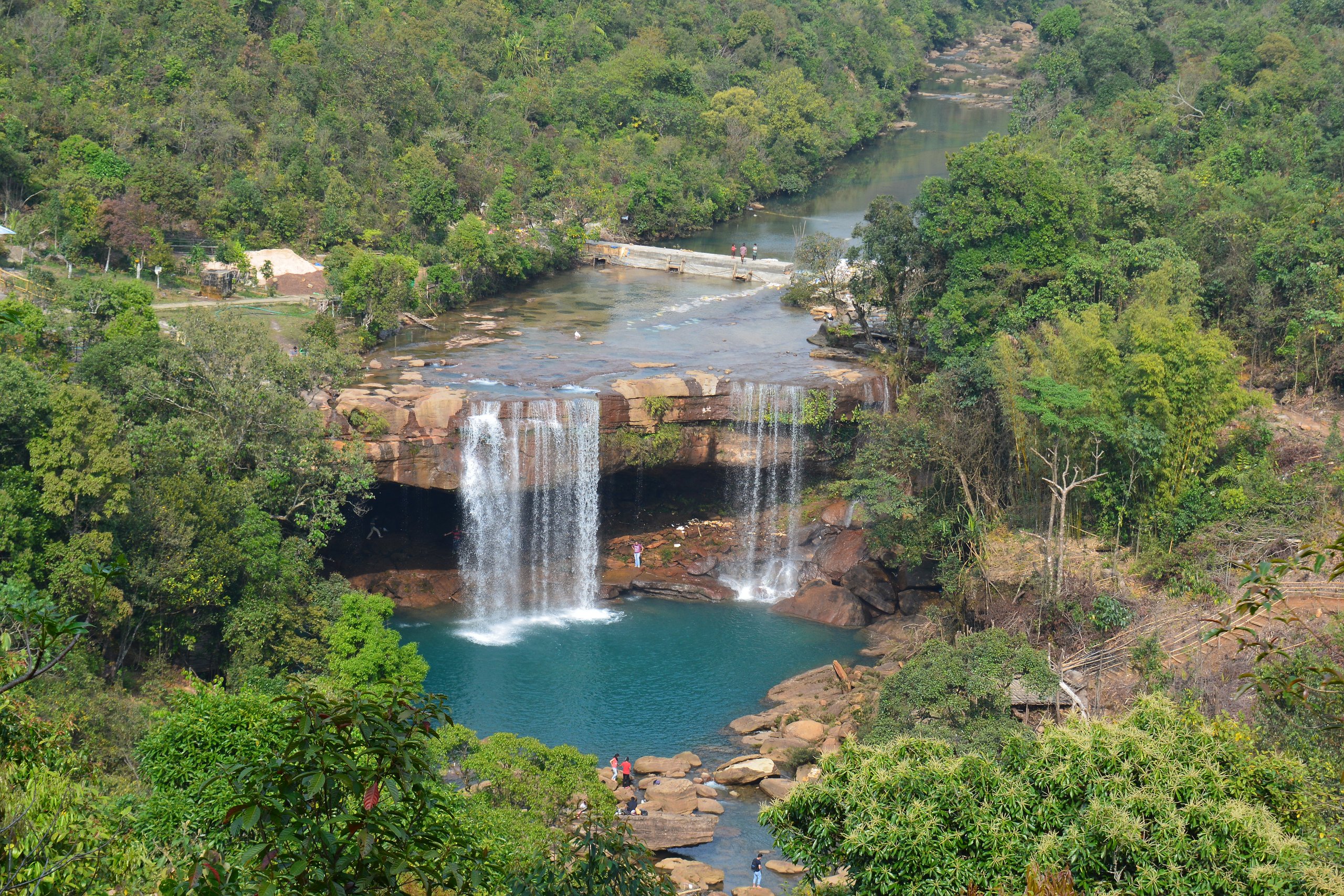
Located 28 km south of Jowai near Jarain village, Krang Suri Waterfall is widely celebrated as one of the most beautiful natural water bodies in South Asia. Set within a tranquil subtropical forest cove, the waterfall is formed by a mountain stream cascading over a wide sandstone rock shelf, plunging 25 meters into an extraordinarily clear cyan-turquoise swimming pool.
The unique turquoise hue of Krang Suri's plunge pool is caused by sunlight scattering through dissolved limestone minerals and ultra-pure mountain runoff. Behind the roaring water curtain lies a natural rock ledge path, allowing visitors to walk behind the waterfall cascade and gaze out through the curtain of falling water.
Managed by the Forest Department in partnership with local village eco-tourism committees, Krang Suri features paved stone staircases (a 15-to-20-minute descent down the cliff face), stone viewpoints, safety railings, changing rooms, and mandatory life jacket rental stations (₹50) for swimming. Visiting before 11:00 AM provides optimal lighting, as morning sunbeams illuminate the vivid turquoise pool floor.
Ancient Standing Stones: The Nartiang Monolith Complex
Situated 24 km north of Jowai lies Nartiang, the historic summer capital of the Jaintia kings. Nartiang contains the largest concentration of standing megaliths (menhirs and dolmens) in Meghalaya, forming a world-renowned archaeological site that rivals global megalithic monuments.
Erected between the 15th and 18th centuries to commemorate major military victories, royal ascensions, and ancestral clan matriarchs, the monolith garden features dozens of weathered stone slabs. The central standing menhir (Mawlyer) is recognized as the tallest standing monolith pillar in the world, towering over 8 meters (27 feet) high, 2 feet thick, and weighing several tons. According to Pnar oral history, this massive stone was transported and erected by the legendary Jaintia warrior Mar Phalyngki under the command of King Jait Ungpiah.
In accordance with Pnar matrilineal customs, vertical standing stones (menhirs) represent male ancestors and brave warriors, while flat horizontal table stones (dolmens or Mawkiko) represent female clan matriarchs resting on stone legs.
Located a short walk from the monolith park is the 500-year-old Nartiang Durga Temple, one of the 51 sacred Shakti Peeths of Hinduism. Built during the reign of King Dhan Manik, the temple blends indigenous Pnar thatch-roof design with Hindu ritual architecture. Historically, human sacrifices were performed during annual Navratri rituals, with the sacrificed head dropped through a hidden pit in the sanctum floor into the underground Myntdu river channel below. Today, traditional goat sacrifices continue under the care of local Brahmin priests and Pnar caretakers.
Tyrshi Falls, Thadlaskein Lake & Regional Landmarks
Beyond Krang Suri and Nartiang, the West Jaintia Hills region surrounding Jowai features several exceptional natural and historical landmarks:
- Tyrshi Falls: Situated 5 km from Jowai town center off National Highway 6, Tyrshi Falls is a dramatic multi-tiered cascade. An arched footbridge spans the upper stream, while an inclined stone pathway leads down to the base where water sprays over mossy rock ledges. The top viewpoint offers sweeping panoramas across the emerald Pynthor Wah rice paddy valley.
- Thadlaskein Lake: Located 8 km west of Jowai near Raliang, this historic 14th-century artificial lake spans several hectares. According to Jaintia history, the lake was excavated manually using arrowheads by followers of chieftain Sajar Nangli, who fled after a dispute with the King of Jaintiapur. Surrounded by pine groves and manicured lawns, Thadlaskein is a peaceful retreat for boating and picnics.
- Syntu Ksiar: Meaning "Flower of Gold", Syntu Ksiar is a serene river bend along the Myntdu River located at the base of Jowai town. It features grassy meadows, riverside tea stalls, angling spots, and the historic U Kiang Nangbah Freedom Memorial monument.
- Jarain Pitcher Plant Lake: Located near Jarain village, this eco-park is centered around a natural lake surrounded by rare endemic pitcher plants (Nepenthes khasiana), insectivorous flora unique to the hills of Meghalaya.
Local Food Culture & Pnar Culinary Traditions
Food culture in Jowai offers a distinct reflection of Pnar agricultural heritage, relying on indigenous hill rice, wild forest herbs, black sesame seeds, fermented beans, and smoked meats. Unlike mainstream Indian cuisines, Pnar cooking emphasizes slow simmering, natural smoking, and minimal reliance on commercial dairy or heavy curry oils.
Key local specialties include:
- Jadoh: The iconic Khasi-Pnar dish of fragrant local short-grain red hill rice cooked with succulent cuts of pork or chicken, pork lard, local ginger, and subtle mountain herbs.
- Doh Nei-Iong: Tender morsels of pork simmered in a thick, velvety black gravy crafted from freshly roasted black sesame seeds (Nei-Iong), garlic, and indigenous ginger. The roasted sesame seeds lend a deep, nutty, umami flavor.
- Tungrymbai: A traditional fermented soybean chutney prepared by fermenting boiled soybeans in leaf wrappings for several days, then stir-frying the soybeans with pork fat, crushed ginger, garlic, and red chilies.
- Puitaro & Puchalaw: Traditional steamed rice cakes made from ground red or white hill rice, served warm at local tea stalls (Sha Shiah) accompanied by hot red tea (Sha Saw).
Practical Travel Guide & Honest Logistics
To ensure a smooth journey to Jowai, travelers should prepare for the practical realities of highland travel in Meghalaya:
- Transit & Road Connectivity: Jowai is connected to Shillong by the 2-lane National Highway 6 (NH6). The 64 km drive takes 2 to 2.5 hours through winding pine forests. Shared local taxis depart frequently from the Anjalee Cinema taxi stand in Shillong (₹250–300 per seat). Hiring a private Nezo SUV is recommended for visiting spread-out destinations like Krang Suri (28 km south of Jowai) and Nartiang (24 km north).
- Cellular Coverage & Digital Payments: Cellular networks (Jio and Airtel) provide dependable 4G and 5G data inside Jowai town, Ladthlaboh, and Ialong. However, signal drops sharply within the Krang Suri river canyon and deep rural valleys. Digital UPI payments often fail outside town; travelers must carry sufficient physical cash (INR) for waterfall entry passes (Krang Suri ₹50, Nartiang ₹20), life jacket rentals, parking, and village food stalls.
- Seasonality & Weather Realities: The best visiting window is October to April, characterized by clear blue skies, dry walking trails, and pleasant daytime temperatures (10°C to 24°C). During monsoon season (June to September), Jowai receives over 3,000 mm of annual rainfall. While monsoons make cascades like Tyrshi roar with immense volume, heavy rains can make stone staircases slippery and cover high mountain passes in dense fog.
- Permit Rules & Local Courtesy: NO Inner Line Permit (ILP) is required for Indian citizens visiting Jowai or Meghalaya. Nominal local community entry passes apply at individual tourist sites. When visiting Nartiang Durga Temple or sacred Pnar ritual sites, visitors should remove shoes where requested and seek permission before photographing community elders or religious ceremonies.
Jowai is part of the breathtaking Northeast India region, known for its pristine natural beauty, rich tribal culture, and unique biodiversity.
TRAVEL PLANNING
Plan Your Visit
Essential guides to prepare for your trip
Itineraries & Trips
Curated 3-day, 5-day & 7-day trip routes
Places to Visit
Top waterfalls, viewpoints & landmarks
Best Time to Visit
When to go for the best experience
How to Reach
Flights, trains, taxis and road options
Where to Stay
Homestays, eco-lodges & resorts
Festivals & Events
Cultural celebrations & seasonal events
Need a Custom Plan?
As Northeast India locals, we work directly with our trusted community drivers and homestay hosts.
Talk to an ExpertTOP ATTRACTIONS
Places to Visit in Jowai
Must-see attractions and hidden gems across Jowai


- Krangsuri Falls: Explore the beauty of Krangsuri Falls in Jowai.
- Nartiang Monoliths: Explore the beauty of Nartiang Monoliths in Jowai.
- Nartiang Durga Temple: Explore the beauty of Nartiang Durga Temple in Jowai.
How Many Days in Jowai?
Plan your own route — or let us handle everything
Things to Do in Jowai
Curated experiences and activities across Jowai by local experts
Where to Stay in Jowai
Verified stays in Jowai with local character
Getting Around
Safe, reliable transfers and car hire in Jowai
Practical Travel Realities & Local Tips
Terrain, ground rules, and essential preparation for Jowai
Local Culinary Traditions & Food
Authentic indigenous gastronomy, tribal flavours, and culinary culture in Jowai
Pnar (Jaintia) cuisine is rich, earthy, and aromatic, relying on local herbs, black sesame seeds, fermented beans, wild bamboo shoots, and indigenous rice.
Jadoh
Signature Khasi-Pnar dish of fragrant local hill rice cooked with succulent meat, lard, and aromatic indigenous spices.
Tungrymbai
Traditional fermented soybean dish cooked with ginger, garlic, green chilies, and black sesame paste, packed with umami flavor.
Doh Nei-Iong
Tender pork cooked in a rich, velvety gravy of roasted black sesame seeds (Nei-Iong) and local ginger.
Puchalaw / Puitaro
Traditional steamed rice cakes prepared from powdered red or white hill rice, enjoyed with morning tea.
Combine Jowai With
Extend your trip with nearby destinations
Travel Guides
Expert guides for Jowai
Reviews
"Nezo Tours organized our fantastic trip. The team was attentive and flexible, accommodating last-minute changes to suit our needs."
Yamini Peter
Mumbai, Maharashtra
"We got the best service than expected. The guide was very friendly and very very helpful, throughout our journey he guided us."
Ammiel Shabong
Shillong, Meghalaya
"Service was excellent. Prices were the best compared to those offered by others. All in all a satisfying experience. Definitely recommended."
Pradeep Agarwal
Delhi, India
PLAN YOUR TRIP
FAQs
Can't find the answer you're looking for? Our expert travel team is always on hand to help you plan the perfect Jowai experience.
Ready to Explore Jowai?
Let our local experts help you plan the perfect trip. Get personalized recommendations and instant quotes.