
Nagaland (The Land of Festivals)
Updated 2026The Land of Sixteen Tribes, Warrior Morungs & Highland Biodiversity
| Category | Detail |
|---|---|
| Altitude / Elevation | 195 m (Dimapur Plains) to 3,841 m (Mount Saramati Peak) |
| Best Time to Visit | October to May (Hornbill Festival: Dec 1–10; Dzukou Lily Bloom: Jun–Jul) |
| Capital | Kohima (Kohima District, 1,444 m altitude) |
| Commercial Hub | Dimapur (Rail & Aviation Hub, 195 m altitude) |
| Highest Summits | Mount Saramati (3,841 m / 12,602 ft), Mount Japfü (3,048 m / 10,000 ft), Mount Pauna (2,841 m) |
| Key Wilderness Sanctuaries | Dzukou Valley (2,452 m), Khonoma Tragopan Sanctuary (KNCTS), Doyang Amur Falcon Reservoir, Intanki National Park, Fakim Wildlife Sanctuary |
| Major Festivals | The Hornbill Festival (Dec 1–10, Kisama), Sekrenyi (Angami, Feb), Moatsu (Ao, May), Tokhu Emong (Lotha, Nov), Tuluni (Sumi, July) |
| Permit Requirement | Inner Line Permit (ILP) mandatory for all domestic Indian citizens; Foreigners register with FRO/SP within 24 hours |
| Sixteen Major Tribes | Angami, Ao, Konyak, Sumi, Lotha, Chakhesang, Rengma, Chang, Khiamniungan, Phom, Pochury, Sangtam, Yimkhiung, Zeliang, Kuki, Tikhir |
| Total Area | 16,579 sq km |
Nagaland is a magnificent montane state in Northeast India, spanning 16,579 square kilometers of rugged mountain ridges in the Patkai and Barail ranges along the international border with Myanmar. Renowned as the homeland of 16 major officially recognized indigenous Naga tribes, the state is globally celebrated for its vibrant Hornbill Festival (held each December at Kisama), the ancient youth academies (Morungs) and carved clan gates (Kharu), the pristine alpine dwarf-bamboo wonderland of Dzukou Valley (2,452 m), Asia's pioneer conservation model at Khonoma Green Village, the trans-border chieftain longhouse in Longwa (Mon), and the snow-draped peak of Mount Saramati (3,841 m).
The deep, rhythmic thunder of hollowed-out tree-trunk log drums reverberates across mist-clad mountain ridges, accompanied by the sonorous, polyphonic war chants of Naga clan warriors in towering hornbill-feather headdresses. Inside rustic timber Morungs, the aromatic wood smoke of slow-burning alder hearths warms seasoned hunters and master weavers, carrying the savory fragrance of smoked cured meats, fermented axone, and wild mountain ginger into the crisp highland twilight.
Inner Line Permit (ILP) is legally mandatory for all domestic Indian non-residents of Nagaland under the Bengal Eastern Frontier Regulation 1873. Apply online at ilp.nagaland.gov.in (₹200 per person for 30-day tourist ILP, ₹500 for foreign tourists). Physical printed copies must be presented at the Chumoukedima check gate on NH29 and at state borders. Foreign tourists are exempt from the Protected Area Permit (PAP) regime under relaxed Ministry of Home Affairs rules, but must complete mandatory registration with the Foreigners Registration Officer (FRO) / SP Office within 24 hours of arrival in the state (excluding citizens of Pakistan, China, and Afghanistan who require prior MHA approval).
Rugged Montane Topography: The Patkai Range & Mount Saramati (3,841 m)
Nagaland is an extraordinary highland state spanning 16,579 square kilometers along the rugged mountain spine of the Patkai and Barail ranges in the Eastern Himalayas. Sharing an extensive international border of 512 kilometers with Myanmar to the east, and bounded by Assam to the west, Arunachal Pradesh to the north, and Manipur to the south, the state is defined by towering forested ridges, precipitous river valleys, and isolated mountain spurs. The elevation spans an immense vertical range—from 195 meters in the alluvial plains of Dimapur to the soaring, snow-capped summit of Mount Saramati (3,841 meters / 12,602 feet) in Kiphire District, where the ridge forms the natural international watershed boundary between India and Myanmar.
The hydrography of Nagaland is carved by several vigorous mountain rivers—including the Doyang, Dhansiri, Dikhu, and Tizu (the only river in Nagaland that flows eastward into the Chindwin-Irrawaddy river system of Myanmar). Due to its rugged topography, over 75% of the state is blanketed in montane temperate and subtropical rainforests, home to towering evergreen dipterocarps, giant tree ferns, wild bamboo groves, and spectacular flowering rhododendrons. The climate varies with altitude: autumn and winter (October to March) bring dry, crisp mountain weather, bright sunny skies, and nighttime temperatures between 2°C and 8°C, while the southwest monsoon (June to September) brings over 2,000 mm of precipitation, transforming the stepped hillsides into vibrant emerald wet-paddy terraces.
The Mosaic of Sixteen Tribes: Clan Governance, Morung Institutions & Master Weaving
Nagaland’s cultural identity is rooted in its extraordinary tribal diversity. The state is home to 16 major officially recognized indigenous Naga tribes—the Angami, Ao, Konyak, Sumi, Lotha, Chakhesang, Rengma, Chang, Khiamniungan, Phom, Pochury, Sangtam, Yimkhiung, Zeliang, Kuki, and Tikhir—alongside several distinct sub-tribes. Each tribe possesses its own distinct unwritten language, traditional clan institutions, customary village laws, and unique geometric handloom patterns:
- Village Democracy & The Khel System: Traditional Naga villages are organized into distinct clan sectors known as khels, functioning as autonomous, democratic self-governing units led by councils of village elders (Gaon Buras).
- The Morung (Ancestral Youth Academy): The central pillar of traditional Naga society was the Morung—a towering wooden bachelor dormitory and civic academy adorned with massive carved hornbill birds and Mithun horns. The Morung served as the educational citadel where young clan members were trained in customary laws, warfare tactics, woodcarving, agricultural rhythms, and sacred oral folk traditions.
- The Feast of Merit & Megaliths: Wealthy village leaders historically conducted lavish series of community feasts known as 'Feasts of Merit', distributing wealth to the entire village and earning the hereditary right to erect colossal stone monoliths (Dahu) and carve horned motifs on their house facades.
- Master Handloom Weaving: Naga women are revered as master weavers operating indigenous backstrap looms. Every tribal shawl carries strict social and warrior iconography: the Ao Tsungkotepsu (embossed with painted animal emblems of tigers and mithuns), the Angami Lorâmhü, and the Lotha Chon Dha.
The Hornbill Festival: The Festival of Festivals at Kisama Heritage Village
Every year from December 1 to December 10, the state unites at the Kisama Naga Heritage Village (12 km south of Kohima) to celebrate the internationally acclaimed Hornbill Festival ('The Festival of Festivals'). Named after the revered Great Indian Hornbill—a bird celebrated in Naga folklore for its alertness, grandeur, and beauty—the 10-day festival provides an awe-inspiring spectacle of indigenous cultural preservation.
Each of the 17 tribes occupies a permanent, architecturally authentic Morung within the Kisama amphitheater, where visitors can witness:
- Warrior Dances & Choral Harmonies: Thrilling performances of synchronized spear dances, traditional headhunting victory chants, and polyphonic folk singing accompanied by the booming resonance of giant wooden log drums (Tsing-kong).
- Indigenous Sports & Feats of Strength: Traditional Naga wrestling (Kene), greased bamboo-pole climbing, and traditional indigenous archery contests.
- The Hornbill Rock Festival & Art Conclaves: India’s premier international rock music competition, drawing celebrated bands, indigenous indie artists, and fashion designers from around the world.
- Traditional Food Feasts & Competitions: Authentic tribal food stalls and the famous Naga King Chilli eating competition featuring the world-record holding Bhut Jolokia.
Indigenous Conservation Milestones: Khonoma Green Village & Dzukou Alpine Sanctuary
Nagaland stands at the global forefront of community-led indigenous environmental conservation:
- Khonoma Green Village (20 km west of Kohima): A 700-year-old Angami settlement celebrated as Asia’s First Green Village. In 1998, after witnessing declining bird populations, the village council enacted a total, self-imposed ban on commercial logging and hunting, establishing the 20 sq km Khonoma Nature Conservation and Tragopan Sanctuary (KNCTS). Khonoma is also world-renowned for its centuries-old, sustainable Nepalese Alder (Alnus nepalensis) agroforestry terraces, which naturally fix nitrogen into the soil without synthetic fertilizers.
- Dzukou Valley Alpine Sanctuary (2,452 m): Stewarded by the Southern Angami Youth Organisation (SAYO), Dzukou Valley is a strictly protected plastic-free alpine sanctuary. Renowned for its unique landscape of undulating dwarf-bamboo (Yushania alpina) meadows and the endemic pink Dzukou Lily (Lilium chitrangadae), the valley is one of the premier high-altitude trekking destinations in India.
- Dzuleke Eco-Tourism Village: Located 40 km west of Kohima, Dzuleke is a pioneer in community-based ecotourism, operating on a rotational homestay model where tourism revenue is pooled into a common village development fund.
The Amur Falcon Capital: Doyang Reservoir in the Lotha Heartland
Located in Wokha District in central Nagaland, the Doyang Reservoir is globally celebrated as the 'Amur Falcon Capital of the World'. Every year from mid-October through late November, up to one million migratory Amur Falcons (Falco amurensis) roost in the dense forests surrounding Doyang during their epic 22,000-kilometer non-stop trans-oceanic migration from southeastern Siberia and northern China to southern Africa.
Through massive community mobilization led by Lotha village elders, wildlife conservationists, and the Nagaland Forest Department, former hunting communities transformed into dedicated protectors of the raptors. Today, travelers and ornithologists from across the globe take silent boat safaris across the misty waters of Doyang Reservoir at dawn and dusk to witness the breathtaking sight of hundreds of thousands of falcons swirling in synchronized flight across the sky.
The Northern Patkai Frontier: Mon District, Konyak Elders & Trans-Border Longwa
In the northernmost corner of Nagaland along the Myanmar frontier lies Mon District, the ancestral homeland of the Konyak Naga tribe, historically celebrated as formidable warriors:
- The Last Tattooed Warriors: In villages like Hongphoi and Mon Village, visitors can meet the last surviving generation of elderly Konyak warrior men who bear intricate ancestral facial and body tattoos (Ghu), earned in pre-colonial eras as symbols of valor.
- The Trans-Border Chieftain Palace of Longwa: Perched directly along the international border ridge, the village of Longwa is ruled by the hereditary chief (The Great Angh). The Angh's massive timber palace straddles the international boundary line—the kitchen sits in India, while the main bedroom sits in Myanmar. Villagers hold dual citizenship privileges and move freely across the open border.
- Master Gunsmiths & Woodcarvers: Konyak artisans are renowned for handcrafting traditional muzzle-loading guns, intricate brass skull pendants, and master woodcarvings.
Ancestral Firewood Cooking: Smoked Cured Meats, Axone, Bastenga & King Chillies
The food culture of Nagaland is an ancient, organic culinary tradition centered around the indoor family hearth (mezhü), defined by natural smoke curing, wild forest foraging, and distinctive microbial fermentation:
- Smoked Pork with Axone (Akhuni): House-smoked pork slow-braised with pungent fermented soybean paste (axone), fresh tomatoes, and charred Naga king chillies, creating an intense savory umami depth.
- Bastenga (Fermented Bamboo Shoot) Curries: Naturally fermented bamboo shoot broth cooked with country chicken, fresh river fish, or pork, delivering a refreshing, tart acidic broth.
- Galho: The quintessential comfort dish—a nourishing, savory red rice porridge simmered with wild forest herbs, seasonal mustard leaves, and cured lard or smoked meats.
- Naga King Chilli (Bhut Jolokia / Raja Mircha): Certified as one of the hottest chillies in the world (surpassing 1,000,000 Scoville Heat Units), used sparingly in roasted tomato chutneys and meat broths.
- Zutho & Thutshe: Indigenous fermented rice brews prepared from sticky red or white rice using wild herbal yeast cakes (piezhu), served fresh in carved bamboo tumblers.
High-Altitude Hydrology & Alpine Flora: Dzukou Lily & Japfu Rhododendrons
The montane ecosystem of Nagaland harbors rare botanical treasures:
- The Dzukou Lily (Lilium chitrangadae): A rare, wild bell-shaped pink lily endemic to Dzukou Valley, flowering in peak glory between mid-June and late July.
- Giant Rhododendron Trees on Mount Japfü: The cloud forests of Mount Japfü (3,048 m) harbor the world's tallest recorded rhododendron tree—a 108-foot (33-meter) Rhododendron arboreum certified by the Guinness Book of Records.
- Blyth’s Tragopan (Tragopan blythii): The vulnerable pheasant and state bird of Nagaland, surviving in primary oak-rhododendron cloud forests.
Statutory Entry Protocols: The Mandatory Inner Line Permit (BEFR 1873) & Village Customary Law
Travelers to Nagaland must adhere to clear statutory regulations:
- Mandatory Inner Line Permit (ILP): Under the Bengal Eastern Frontier Regulation 1873, all domestic Indian citizens who are not indigenous residents of Nagaland must possess an approved e-ILP. Apply online at
ilp.nagaland.gov.in(₹200 per person for 30 days validity). Printed physical copies must be presented at the Chumoukedima check gate along NH29 and at rail/road entry borders. Note that the ILP was officially extended to Dimapur district in December 2019. - Foreign National Registration (FRO): General foreign tourists do not require a Protected Area Permit (PAP) under relaxed MHA norms, but must complete mandatory registration with the Foreigners Registration Officer (FRO) / SP Office within 24 hours of arrival (excluding citizens of Pakistan, China, and Afghanistan).
- Respect for Customary Village Authority: Village Councils (Gaon Buras) exercise strong customary authority. Always pay the nominal community eco-development fee (₹50–₹100) at village kiosks in Khonoma, Dzuleke, or Dzukou Valley, and ask permission before photographing village elders.
Travel Logistics & Cultural Rhythm: Sunday Observance, Mountain Corridors & Road Realities
- The Sunday Sabbath Rest: Over 90% of the Naga population practices Christianity. On Sundays, commercial shops, private restaurants, public Sumos, and markets are completely closed. Ensure private vehicles and homestay meals are pre-arranged if traveling on a Sunday.
- Highways & Transit: The 4-lane National Highway 29 (NH29) connects Dimapur to Kohima (74 km, 2.5–3.5 hours). National Highway 2 (NH2) runs south to Manipur and north to Wokha (75 km) and Mokokchung (150 km). Mountain travel is best executed in private 4x4 SUVs (Innova Crysta, Scorpio, Bolero) with experienced local drivers.
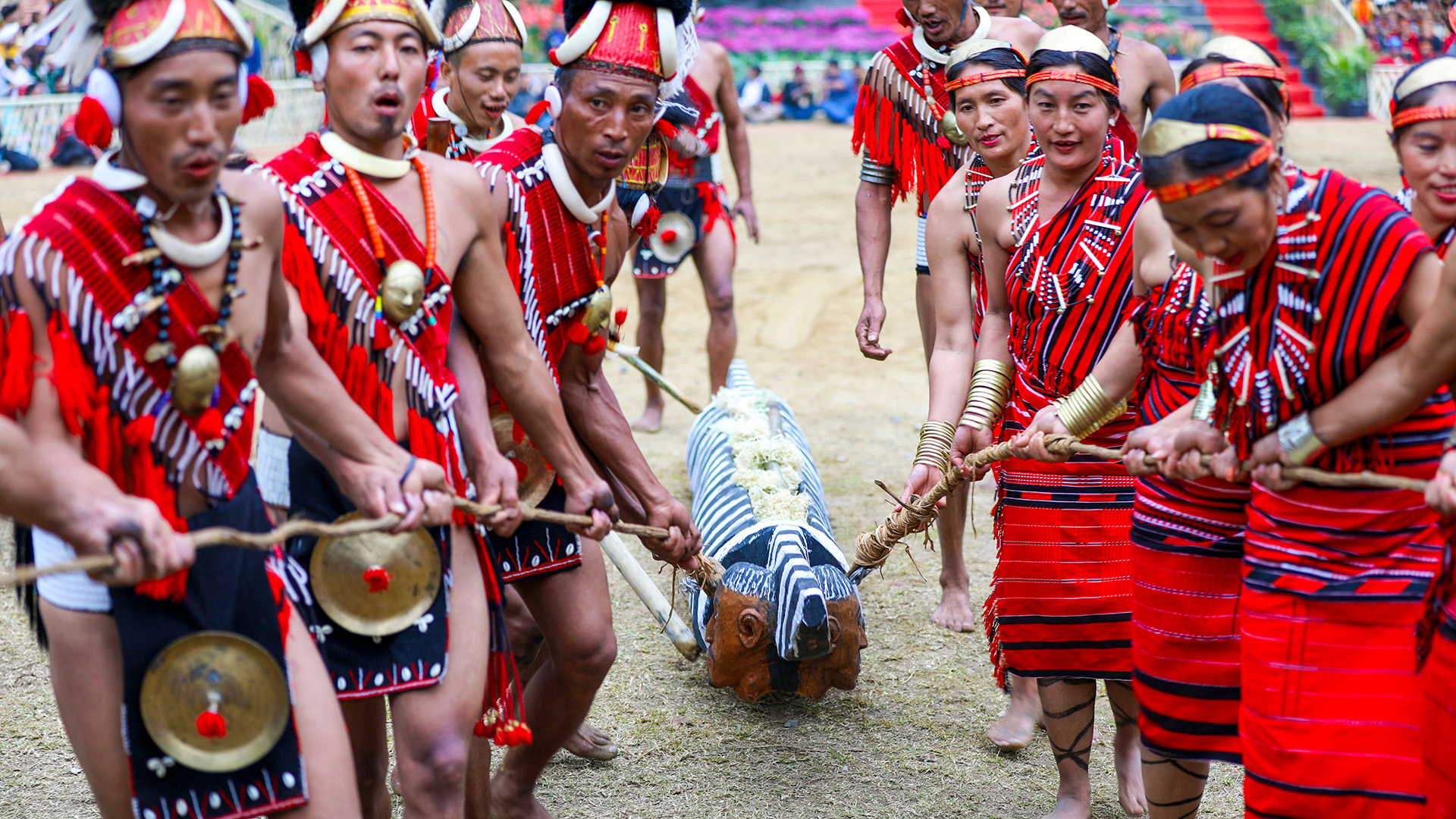
Nagaland's Hornbill Festival (Dec 1-10) brings all 16 major Naga tribes together — formerly known as headhunters, now celebrating peace through culture.
TRAVEL PLANNING
Plan Your Visit
Essential guides to prepare for your trip
Itineraries & Trips
Curated 3-day, 5-day & 7-day trip routes
Places to Visit
Top waterfalls, viewpoints & landmarks
Best Time to Visit
When to go for the best experience
How to Reach
Flights, trains, taxis and road options
Where to Stay
Homestays, eco-lodges & resorts
Permits & Entry
Required documents and ILP pass guidance
Nagaland Tour Packages
Ready-to-book Nagaland tours

Need a Custom Plan?
As Northeast India locals, we work directly with our trusted community drivers and homestay hosts.
Talk to an ExpertTOP ATTRACTIONS
Places to Visit in Nagaland
Must-see attractions and hidden gems across Nagaland


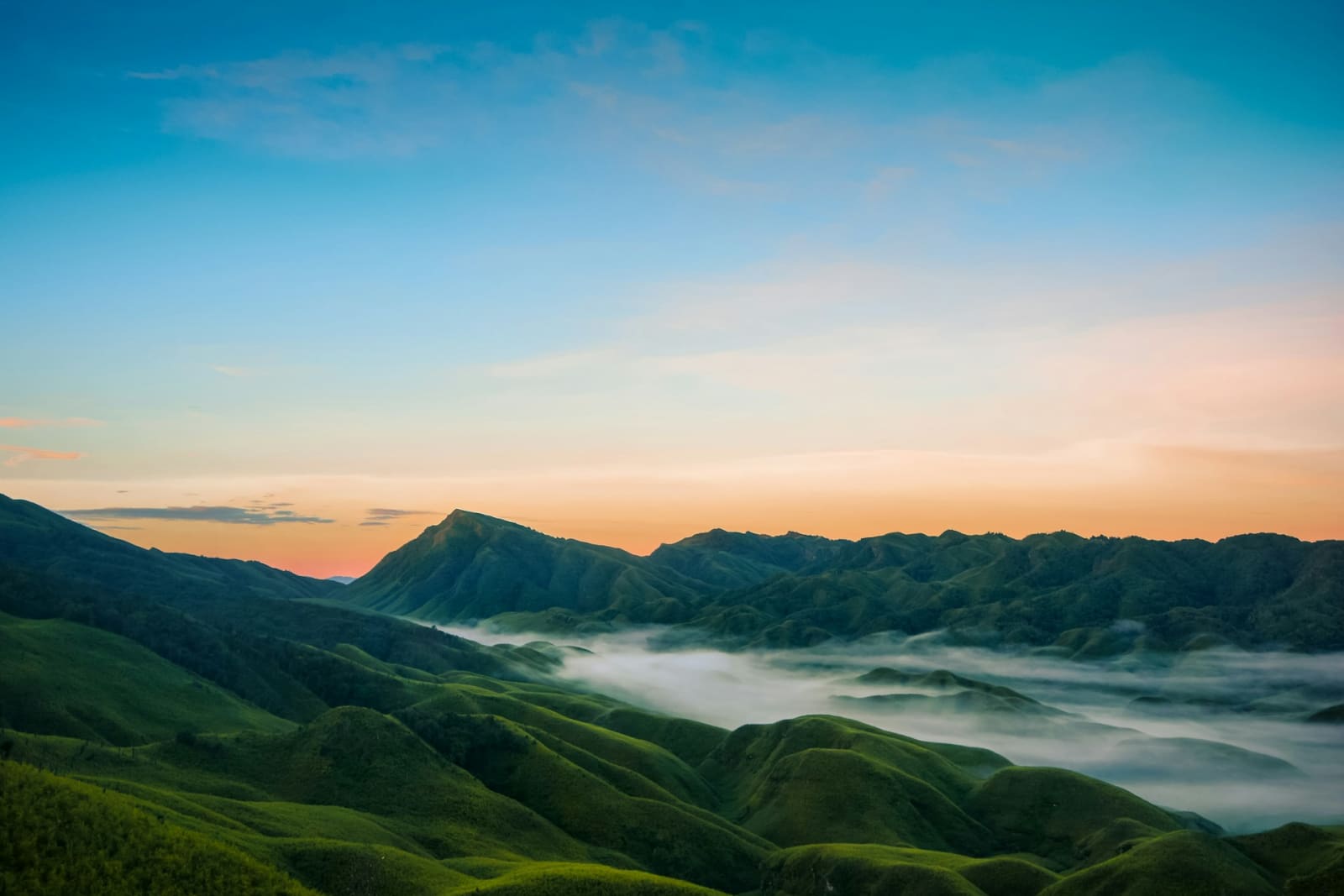
- Khonoma Green Village: Asia's First Green Village & Historic Angami Fortress
- Kisama Heritage Village: Window to Nagaland
- Dzukou Valley Trek: The Valley of Flowers of the Northeast
How Many Days in Nagaland?
Plan your own route — or let us handle everything
Things to Do in Nagaland
Curated experiences and activities across Nagaland by local experts
Where to Stay in Nagaland
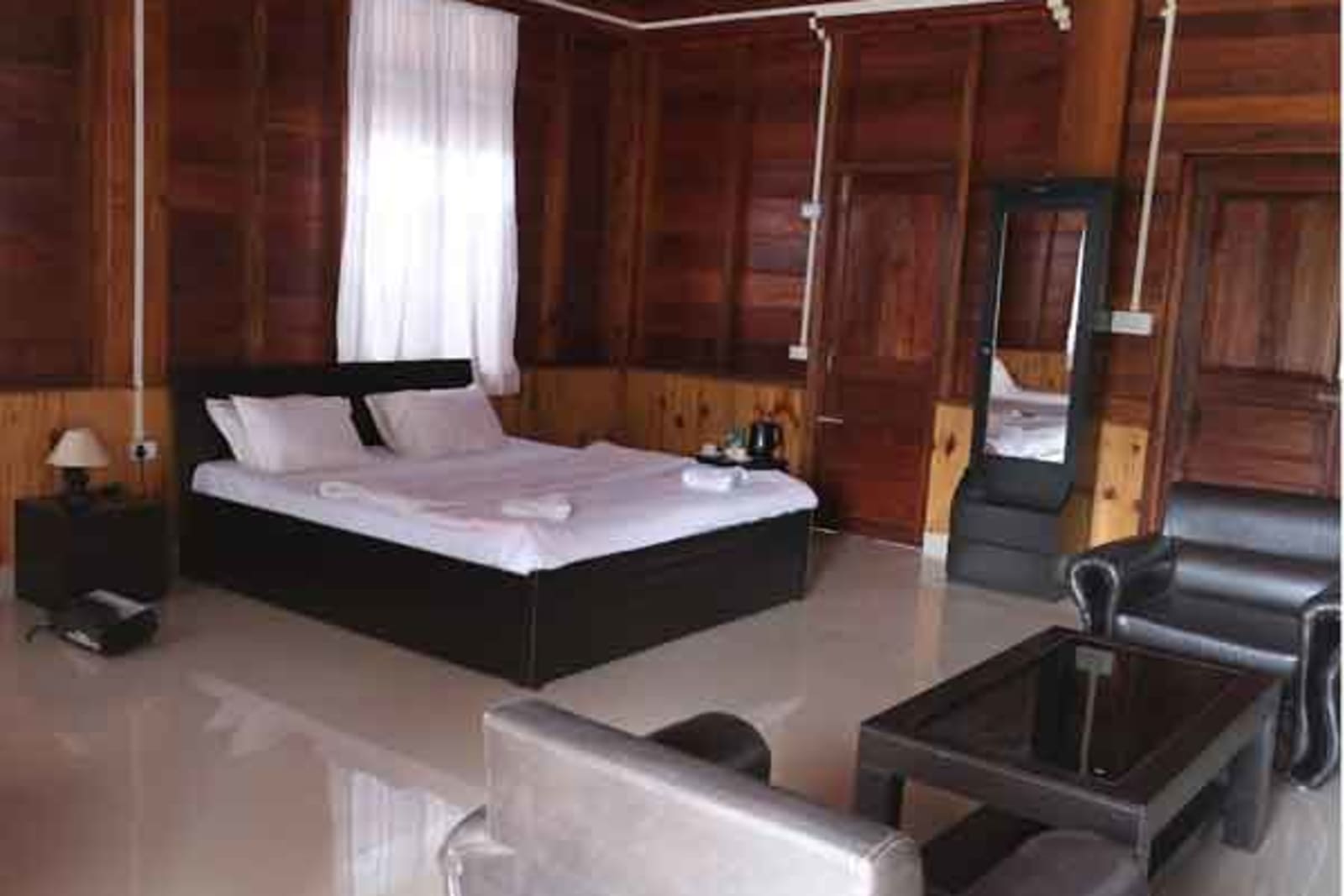
Verified stays in Nagaland with local character


Getting Around
Safe, reliable transfers and car hire in Nagaland
Practical Travel Realities & Local Tips
Terrain, ground rules, and essential preparation for Nagaland
Nagaland's rugged terrain features deep valleys, steep mountain staircases, and high-altitude ridge paths. Understanding the physical demands of each destination ensures a safe, rewarding expedition:
Trek Difficulty & Physical Metric Index
- Dzukou Valley Alpine Trek (Viswema to Valley Basin): Moderate (Rating: 3/5). Begins at the Viswema road-head (2,100 m) with a steep, strenuous 45-to-60 minute ascent climbing over **2,000 natural stone and root stairs** through mossy rainforest to reach the mountain ridge (2,550 m). Once at the ridge, the trail transforms into a gentle, undulating 2-hour walk across dwarf-bamboo hills to the SAYO rest house. Total distance: 9 km one-way. Suitable for individuals with average physical fitness.
- Dzukou Valley Jakhama Route: Strenuous (Rating: 4/5). A continuous, steep 3.5-to-4.5 hour vertical stone staircase climb through dense forest. Recommended primarily for the descent to save time, as it drops directly down to Jakhama village. High eccentric quad and knee strain; trekking poles recommended.
- Mount Japfu Ridge & Forest Trek (3,048 m): Strenuous-Hard (Rating: 4.5/5). An 8-hour round-trip mountain climb through virgin subtropical rainforest, home to the world's tallest recorded rhododendron tree (over 108 ft tall). Involves ascending 1,400 vertical meters over slippery moss and mud tracks. High cardiovascular endurance required; certified local guide mandatory.
- Mount Saramati Expedition (3,841 m — Patkai Range): Extreme (Rating: 5/5). Nagaland's highest mountain located on the Myanmar border in Kiphire District. A multi-day wilderness trek departing from Thanamir village (famed for organic apples). Involves 2 days of continuous mountain ascent across pine, birch, and alpine meadows, camping in sub-zero wilderness shelters. Requires full expedition self-sufficiency.
- Khonoma Village Walking Circuit: Easy to Moderate (Rating: 2/5). Navigating the historic Angami stone-paved lanes, defensive forts (Semoma Fort), and alder tree terraces involves ascending and descending steep stone stairs over 2 to 3 hours. Suitable for active families and seniors with walking sticks.
Accessibility for Senior Citizens & Comfort Travelers
Travelers seeking low-impact cultural touring can comfortably experience: the **Kohima War Cemetery** (smooth paved terraced ramps with seating), **Mary Help of Christians Cathedral** (step-free driveway and flat interior floors), **Kisama Naga Heritage Village** (central amphitheater and paved access roads to major tribal Morungs), the **Kachari Rajbari Monolith Ruins** in Dimapur (100% flat manicured park lawns), and **Glory Peak in Pfutsero** (vehicle access directly to the summit viewing deck).
Local Culinary Traditions & Food
Authentic indigenous gastronomy, tribal flavours, and culinary culture in Nagaland
Naga food culture is an authentic, ancestral culinary tradition rooted in woodfire smoke preservation, wild forest foraging, and distinctive microbial fermentation, completely free from commercial powdered spices, heavy gravies, or synthetic seasonings.
Master Guide to Indigenous Naga Dishes & Flavors
- Smoked Pork with Axone & Bhut Jolokia: The iconic signature dish of Nagaland. Tender cubes of hearth-smoked pork belly slow-braised with Axone (also spelled Akhuni—fermented, cake-cured whole soybeans), fresh tomatoes, and fiery Bhut Jolokia (Naga King Chilli / Raja Mircha), creating a deeply savory, pungent, umami-rich gravy.
- Smoked Meat or Dried River Fish with Anishi: An ancient specialty of the Ao tribe. Anishi is prepared by harvesting fresh taro (yam) leaves, wrapping them in banana leaves to ferment for several days, pounding them into dark cakes, and smoking them on wicker racks above the indoor hearth. Stewed with smoked pork or river fish for an earthy, smoky depth.
- Galho (Naga Comfort Rice Stew): The ultimate comforting one-pot staple. Short-grain starchy hill rice simmered with wild foraged forest greens, mountain ginger, garlic, and seasoned with smoked pork, pork lard, or fermented bamboo shoot. Vegetarian variations simmered with local seasonal greens and fermented bamboo are widely available.
- Bastenga & Michira (Fermented Bamboo Shoot Curries): Fresh young bamboo shoots preserved in brine, providing a tart, crisp, acidic flavor base used to braise pork, country chicken, or freshwater fish without added oil.
- Sticky Red Upland Rice (Ruodi): Organically grown in mountain terraces irrigated by glacial mountain springs. Nutty, fragrant, and rich in natural minerals, served as the foundation of every traditional meal.
- Zutho & Thutshe (Indigenous Fermented Rice Brews): Zutho is the traditional unpasteurized rice beer of the Angami and Chakhesang tribes—frothy, milky-white, and refreshing with a mildly sweet-and-sour fruity flavor. Thutshe is the sweeter, golden, highly prized first-stage fermentation extract.
- Naga King Chilli Chutney: Roasted Bhut Jolokia mashed with charred tree tomatoes (Tamarillo), garlic, salt, and fermented dry fish or roasted sesame seeds. Handle with care—one drop delivers intense, lingering heat.
Curated Dining Spots & Hearth Cafes
For authentic local dining in Kohima, visit Kigwema Homestay Kitchens for traditional Angami hearth-cooked meals, D Café in central Kohima (famous for pork ribs and local herbal teas), and Sorshia & Co. in classic timber interiors. In Dimapur, dine at Niathu Resort’s The Bamboo for refined Naga thalis and Jharokha for multi-cuisine dining. Vegetarian travelers are warmly catered to in village homestays with steamed squash (*Chayote*), wild fiddlehead ferns (*Dhekia*), organic valley lentils, and fresh mustard greens.
Combine Nagaland With
Extend your trip with nearby destinations
Travel Guides
Expert guides for Nagaland
Reviews
"The Hornbill Festival was the most vibrant cultural event I've ever attended. Nezo arranged everything — permits, hotel, and festival access."
Vikram Singh
Jaipur, Rajasthan
"Dzukou Valley was spectacular. The trek was challenging but Nezo arranged a great local guide who made the experience safe and fun."
Laura Bennett
Sydney, Australia
"As a local, I was impressed by how Nezo handles Nagaland tours. They respected our culture and supported local Khonoma guides. Excellent."
Kenei Kire
Kohima, Nagaland
PLAN YOUR TRIP
FAQs
Can't find the answer you're looking for? Our expert travel team is always on hand to help you plan the perfect Nagaland experience.
Ready to Explore Nagaland?
Let our local experts help you plan the perfect trip. Get personalized recommendations and instant quotes.