
Assam (Asom)
Updated 2026The Valley of the Brahmaputra, Realm of the One-Horned Rhino & World's Tea Heartland
| Category | Detail |
|---|---|
| Altitude / Elevation | 40 m (Dhubri / Guwahati Floodplains) to 1,960 m (North Cachar / Barail Hills) |
| Best Time to Visit | October to April (Dry winter safari season; National Parks open Oct/Nov to April/May) |
| Capital | Dispur / Guwahati (Kamrup Metropolitan District) |
| Cultural Landmarks | Majuli River Island (Vaishnavite Satras), Sivasagar (Ahom Kingdom Monuments), Kamakhya Temple (Shakti Peetha) |
| Five National Parks | Kaziranga (UNESCO), Manas (UNESCO), Nameri, Dibru-Saikhowa, Orang (Plus Raimona & Dihing Patkai) |
| Flagship River | The Brahmaputra River (720 km length across Assam) & Barak River |
| Iconic Wildlife | Great Indian One-Horned Rhinoceros (2,600+ in Kaziranga), Royal Bengal Tiger, Asian Elephant, Wild Water Buffalo, Pygmy Hog, Golden Langur |
| Permit Requirement | No Inner Line Permit (ILP) required — completely open and permit-free for domestic and foreign travelers |
| Tea Heritage | World's largest tea-growing region (over 800 estates producing 50%+ of India's tea) |
| Total Area | 78,438 sq km |
Assam is the vibrant heartland and premier multimodal gateway of Northeast India, spanning 78,438 square kilometers across the fertile alluvial basin of the Brahmaputra River and the southern Barak Valley. Globally celebrated for harboring the world’s largest population of the Great Indian One-Horned Rhinoceros across five iconic National Parks—Kaziranga, Manas, Nameri, Dibru-Saikhowa, and Orang—the state is equally renowned for Majuli (the world’s largest inhabited river island and spiritual seat of Neo-Vaishnavite Satras), the six-century legacy of the sovereign Ahom Dynasty at Sivasagar, more than 800 sprawling heritage tea estates, and the sacred hilltop shrine of Kamakhya Temple in Guwahati.
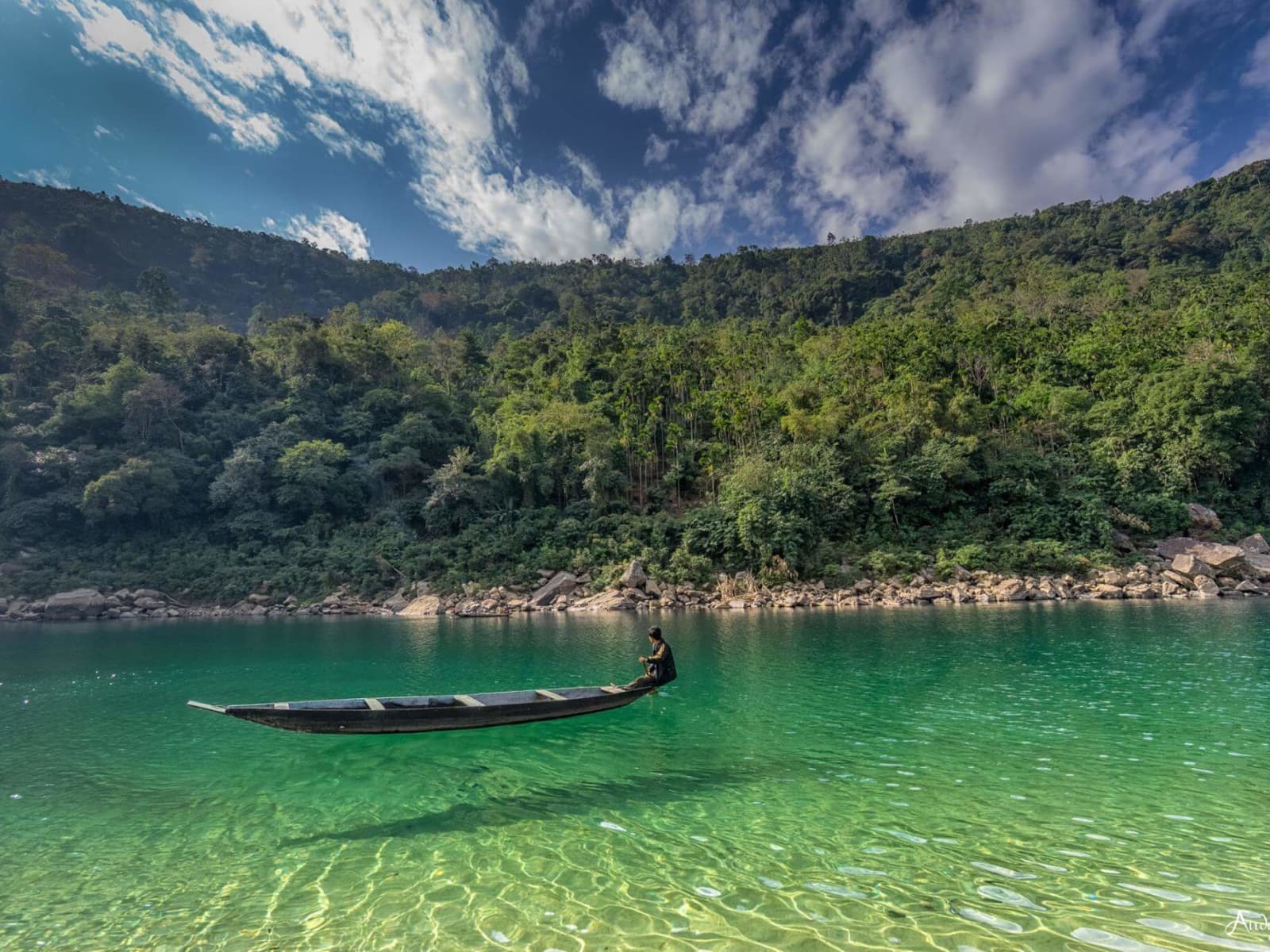
The amber evening sun melts over the vast, shimmering expanse of the Brahmaputra River, silhouetting wooden country boats and ancient river island satras. Across emerald tea gardens that stretch endlessly toward misty blue hills, the gentle, earthy aroma of freshly plucked two leaves and a bud mingles with the distant, thundering trumpet of wild elephant herds roaming the wet alluvial grasslands of Kaziranga.
Travel to Assam is completely open, unrestricted, and permit-free. Domestic Indian citizens do NOT require an Inner Line Permit (ILP) or any travel permit to enter or travel anywhere in Assam. Foreign nationals require only a standard valid Indian Visa / e-Visa and Passport; no Protected Area Permit (PAP) or Restricted Area Permit (RAP) is required for tourist destinations or wildlife national parks across the state.
The Brahmaputra Alluvial Basin & Fluvial Geography (78,438 sq km)
Assam occupies a uniquely dominant geographical position in Northeast India, spanning 78,438 square kilometers across the vast, fertile alluvial valley of the mighty Brahmaputra River and the southern Barak River Valley. Bounded to the north by the forested foothills of the Eastern Himalayas in Bhutan and Arunachal Pradesh, to the east by the Patkai and Naga Hills, to the south by the high plateau of Meghalaya and the hills of Mizoram and Tripura, and to the west by West Bengal and Bangladesh, Assam functions as the essential geographic pivot and economic crossroads of the entire region.
The physical geography of Assam is shaped by the immense hydrological power of the Brahmaputra—known locally as the Luhit or Bor-Luhit ('The Red River'). Entering the state near Sadiya as a massive braided river network, the Brahmaputra flows 720 kilometers westward across Assam, carving wide sandbanks (char-chaporis), oxbow lakes (beels), and rich alluvial floodplains before turning south into Bangladesh. The altitude of the state ranges from just 40 meters above sea level in the western river plains of Dhubri to over 1,960 meters in the rugged Barail Range of Dima Hasao. The climate is sub-tropical and humid: the southwest monsoon (June to September) brings torrential rains (1,600 mm to over 3,200 mm) that regularly overflow the riverbanks, nourishing the world's most productive wetland grasslands and semi-evergreen forest biomes.
The Five Premier National Parks: Kaziranga, Manas, Nameri, Dibru-Saikhowa & Orang
Assam is a global biodiversity superpower, harboring the most critical wildlife conservation sanctuaries in Asia. The state features five world-famous National Parks (and two newly designated parks, Raimona and Dihing Patkai):
- Kaziranga National Park (UNESCO World Heritage Site, 1,090 sq km): Situated across Golaghat, Nagaon, and Sonitpur districts along the southern bank of the Brahmaputra, Kaziranga is home to the world's largest population of the Great Indian One-Horned Rhinoceros (Rhinoceros unicornis)—numbering over 2,600 individuals (two-thirds of the planet's entire wild population). Spanning tall elephant grass marshes and tropical moist broadleaf forests, Kaziranga also hosts the world's highest density of Royal Bengal Tigers, massive herds of Asian Elephants, Wild Water Buffalo (Bubalus arnee), and the endangered Eastern Swamp Deer (Rucervus duvaucelii ranjitsinhi).
- Manas National Park (UNESCO World Heritage & Biosphere Reserve, 950 sq km): Nestled in the Himalayan foothills on the international border with Bhutan, Manas is renowned for its breathtaking scenery along the crystal-clear Manas River. It provides a vital refuge for rare and endemic species found nowhere else, including the Golden Langur (Trachypithecus geei), the critically endangered Pygmy Hog (Porcula salvania), the Hispid Hare, and the Bengal Florican.
- Nameri National Park (200 sq km): Perched in Sonitpur District at the base of the Eastern Himalayas, Nameri is an untouched haven of semi-evergreen forests and the pristine Jia Bhoroli River. Celebrated as a premier birdwatching destination (home to over 370 bird species, including the endangered White-Winged Wood Duck, Assam's state bird), Nameri is also famous for eco-camping, guided forest walking safaris, and catch-and-release angling for the legendary Golden Mahseer.
- Dibru-Saikhowa National Park (340 sq km): Located in Upper Assam between the Brahmaputra and Dibru rivers, this wetland biosphere reserve is famous for its semi-wild feral horses, endangered Gangetic River Dolphins (Platanista gangetica), and rich avian life across vast swamp canopies.
- Orang National Park (79 sq km): Often referred to as 'Mini Kaziranga', Orang sits on the northern bank of the Brahmaputra in Darrang and Sonitpur districts, featuring a dense population of one-horned rhinos, tigers, and pygmy hogs across compact alluvial savannahs.
Six Centuries of Sovereignty: The Ahom Dynasty, Sivasagar & Lachit Borphukan
Assam possesses one of the most remarkable historical records in the Indian subcontinent. For six centuries—from 1228 to 1826 A.D.—the state was ruled by the sovereign Ahom Dynasty, established by the Tai prince Chaolung Sukaphaa, who crossed the Patkai Range from Southeast Asia to unify the indigenous river valley communities into a powerful kingdom (Mong Dun Sun Kham). The Ahoms maintained unbroken independence, famously repelling 17 separate military invasions by the Mughal Empire, culminating in the legendary 1671 Battle of Saraighat on the waters of the Brahmaputra, where Ahom General Lachit Borphukan decisively defeated the massive Mughal naval and land forces under Raja Ram Singh.
The architectural zenith of the Ahom Kingdom survives in Sivasagar (the historic royal capital of Rangpur):
- Rang Ghar: A monumental two-storied, oval royal amphitheater constructed by King Pramatta Singha in 1744. Featuring a unique roof modeled after an upturned Ahom royal longboat, it is recognized as Asia's oldest surviving royal sports pavilion, where monarchs watched traditional bullfights, wrestling, and Rongali Bihu performances.
- Kareng Ghar & Talatal Ghar: The royal palatial citadel featuring multi-story underground subterranean escape tunnels, brick barracks, and gunpowder storage vaults.
- Sivadol & The Massive Pukhuris: Sivadol is the tallest Shiva temple in India (104 feet), built on the banks of the colossal, man-made 257-acre Joysagar Tank and Sivasagar Tank, constructed by Ahom queens.
Majuli Island: The World’s Largest River Island & Neo-Vaishnavite Satra Heritage
Resting in the swirling waters of the upper Brahmaputra River, Majuli is officially recognized by Guinness World Records as the world's largest inhabited freshwater river island (spanning approx. 352 square kilometers). Majuli is the undisputed spiritual and cultural citadel of Assam, serving since the 15th century as the cradle of the Ekasarana Dharma (Neo-Vaishnavite movement) founded by the great polymath, philosopher, and social reformer Srimanta Sankardev.
The island is home to more than 20 historic Satras (monastic socio-religious institutions) that have preserved classical Assamese music, classical Sattriya Dance (one of India's 8 recognized classical dance forms), literature, and theater for over 500 years:
- Uttar Kamalabari Satra & Dakhinpat Satra: World-renowned centers for classical Sattriya monastic drum-playing (Khol) and cymbal dances (Bhortal).
- Auniati Satra: Possessing an invaluable museum of ancient Ahom royal copper charters, ivory artifacts, and ancient Assamese brass swords.
- Samaguri Satra: Globally famous for the living heritage of traditional bamboo and clay mask-making (Mukha), where master craftsmen craft expressive, lightweight theatrical masks used during Bhaona (spiritual folk drama) performances.
- Mishing Tribal Villages: Majuli is also the cultural homeland of the indigenous Mishing tribe, who dwell in traditional stilt bamboo houses (Chang Ghar) along the riverbanks, cultivating deepwater paddy and weaving intricate handloom textiles like the Gero and Ege.
Sacred Shakti Traditions: Kamakhya Temple atop Nilachal Hill
Perched on Nilachal Hill in Guwahati overlooking the Brahmaputra, the ancient Kamakhya Temple is one of the oldest and most venerated of the 51 sacred Shakti Peethas in Hinduism. Dedicated to the goddess Kamakhya (the embodiment of feminine creative energy and desire), the shrine does not house an anthropomorphic idol; rather, inside the natural subterranean rock cave (Garbagriha), a natural underground spring flows continuously over a sacred rock cleft symbolizing the Yoni (the cosmic womb of the Divine Mother).
Every year in mid-June during the onset of the monsoon, the temple hosts the colossal Ambubachi Mela, a sacred festival celebrating the annual menstruation of Mother Earth. Tens of thousands of pilgrims, sadhus, Tantric practitioners, and international visitors assemble at Nilachal Hill for three days of deep spiritual meditation, during which the temple gates remain closed before reopening with divine blessings and sacred red cloth distribution (Rakta Bastra).
The Global Tea Heartland: 800+ Estates & The Heritage Bungalow Circuit
Assam is the largest single tea-growing region in the world, producing more than 50% of India's total tea output and over 15% of the world's commercial tea. In 1823, Scottish adventurer Robert Bruce discovered indigenous wild tea plants (Camellia sinensis var. assamica) cultivated by the local Singpho tribe in Upper Assam, sparking the birth of the modern Indian tea industry.
Today, Upper Assam—spanning the districts of Jorhat, Dibrugarh, Golaghat, and Tinsukia—is blanketed by more than 800 sprawling tea estates. The landscape is characterized by manicured emerald green tea bushes, towering shade trees, and magnificent 19th-century colonial British Planter Heritage Bungalows constructed on elevated wooden stilts (Chang style). Staying in a heritage tea bungalow (such as Kaziranga Golf Resort or Mancotta Estate in Dibrugarh) allows travelers to experience high tea, guided tea factory tasting sessions (exploring robust CTC and delicate Orthodox Assam black teas), and private walks through the estates.
Indigenous Assamese Culinary Tradition: Khar, Tenga, Pitha & Bamboo Shoot Broths
The traditional food culture of Assam is an unpretentious, deeply flavorful culinary heritage defined by fresh river fish, indigenous greens, aromatic unpolished rice, and unique natural alkalis and sours, prepared with minimal spices:
- Khar: The defining prelude to every traditional Assamese meal—a distinctive, cleansing dish prepared by filtering water through the sun-dried, charred ashes of indigenous banana peels (Kholakhar), cooked with raw papaya, mustard greens, or fresh river fish.
- Masor Tenga: A refreshing, light, and tangy fish curry prepared with fresh catch from the Brahmaputra (such as Rohu, Chital, or Borali), flavored with natural souring agents like elephant apple (Ou Tenga), tomatoes, or dried mangosteen (Thekera).
- Duck with Ash Gourd (Hahor Mangxo): Tender country duck braised with winter ash gourd, black pepper, and crushed ginger, a beloved winter feast staple.
- Pork with Bamboo Shoot & Bhut Jolokia: Succulent pork simmered with freshly shredded fermented bamboo shoots and seasoned with fiery ghost pepper.
- Pitha & Laru: Traditional festive sweets prepared during Bihu from sticky indigenous rice flour (Bora Saul), filled with grated coconut, jaggery, and roasted black sesame seeds.
Multimodal Connectivity: The Gateway of Northeast India (GAU, Broad-Gauge Rail & Expressways)
Assam serves as the essential multi-modal transit hub connecting all eight northeastern states to the rest of India:
- Aviation Gateways: Lokpriya Gopinath Bordoloi International Airport in Guwahati (GAU) is the busiest airport in the region, operating 24/7 with non-stop flights to New Delhi, Mumbai, Kolkata, Bengaluru, Hyderabad, and Chennai. Upper Assam is served by Dibrugarh Airport (DIB) and Jorhat Airport (JRH), providing immediate access to tea estates, Majuli, and Nagaland/Arunachal borders.
- Superfast Broad-Gauge Rail: Guwahati Railway Station (GHY) and Kamakhya Junction (KYQ) receive prestigious daily nationwide superfast trains, including the Dibrugarh Rajdhani Express, the Guwahati–NJP Vande Bharat Express, and the Saraighat Express.
- Four-Lane National Expressways: The modernized 4-lane National Highway 27 (East-West Corridor) and NH6 provide seamless highway connectivity across the Brahmaputra valley from Guwahati to Kaziranga (4 hours), Shillong (3.5 hours), and Upper Assam.
Frictionless Travel Intelligence: Zero Permit Mandates & Seasonal River Dynamics
- Completely Permit-Free: Travelers should note that Assam requires NO Inner Line Permit (ILP) for Indian citizens and NO Protected Area Permit (PAP) for foreign visitors. Entry and inter-district travel are completely unrestricted and friction-free across all national parks and cultural hubs.
- Seasonal Wildlife Windows: All National Parks in Assam (Kaziranga, Manas, Nameri, Orang) are officially open for jeep and elephant safaris from October/November to April/May. During the monsoon (June–September), park safari tracks close due to seasonal river flooding, although scenic river cruises and tea estate visits operate year-round.
- Open-Jaw Routing Recommendation: To avoid 8+ hours of backtracking road travel, travelers exploring both Western and Upper Assam should book an 'open-jaw' flight itinerary: arrive at Guwahati Airport (GAU) (to explore Kamakhya and Kaziranga) and depart from Dibrugarh Airport (DIB) (after exploring Majuli and Sivasagar).
Assam produces over 50% of India's tea output and is home to 800+ tea estates growing the world-famous Assam tea.
TRAVEL PLANNING
Plan Your Visit
Essential guides to prepare for your trip
Itineraries & Trips
Curated 3-day, 5-day & 7-day trip routes
Places to Visit
Top waterfalls, viewpoints & landmarks
Best Time to Visit
When to go for the best experience
How to Reach
Flights, trains, taxis and road options
Where to Stay
Homestays, eco-lodges & resorts
Festivals & Events
Cultural celebrations & seasonal events
Assam Tour Packages
Ready-to-book Assam tours

Need a Custom Plan?
As Assam locals, we'll plan your journey across the Brahmaputra Valley.
Talk to an ExpertTOP ATTRACTIONS
Places to Visit in Assam
Must-see attractions and hidden gems across Assam


- Jeep Safari in Western Range, Kaziranga: The ultimate destination for One-horned Rhino sightings.
- Kamakhya Temple: The ancient Nilachal seat of Tantric power and the bleeding goddess Kamakhya.
- Brahmaputra River Cruise: The iconic river cruise experience on the Brahmaputra in Guwahati aboard Alfresco Grand
- Jeep Safari in Central Range, Kaziranga: Ride through the core marshy floodplains of the Kohora range.
- Jeep Safari in Eastern Range, Kaziranga: Quiet woodlands and exceptional birding around Sohola Beel.
- Jeep Safari in Burapahar Range, Kaziranga: Track Hoolock Gibbons and Capped Langurs through hilly broadleaf forests in Kaziranga's remote westernmost beat.
- Elephant Safari in Western Range: Dawn patrol on elephant-back to track rhinos closely in Bagori.
- Elephant Safari in Central Range: Track wild rhinos silently at sunrise from the Mihimukh riding tower.
- Elephant Safari in Burapahar Range: An offbeat forest canopy adventure tracking primates and wild elephant herds in Ghorakati.
- Kaziranga National Orchid and Biodiversity Park: Explore Northeast India's largest orchidarium, 500+ wild species, rice seed museum, live Bihu dances, and Assamese heritage handlooms.
- Bhomoraguri Boat Safari: **Bhomoraguri Boat Safari** is an ecotourism activity located at the Bhomoraguri Ecotourism Zone in Tezpur, Sonitpur District, Assam. Managed by the *
- Dhanbari Ghat Boat Safari: **Dhanbari Ghat Boat Safari** is a riverine wildlife activity located at Dhanbari Ghat, near the Agoratoli Range of Kaziranga National Park, Golaghat
- Kakochang Waterfall: A stunning multi-tiered waterfall cascading down the Karbi Anglong foothills near Bokakhat
- Hollongapar Gibbon Sanctuary: India’s Primate Forest Island
- Deopahar Archaeological Site: The Stone Temple Ruins of Numaligarh
- Traditional Dance & Cultural Program in Kaziranga: Explore the beauty of Traditional Dance & Cultural Program in Kaziranga in Kaziranga.
- Roop's Kitchen: Explore the beauty of Roop's Kitchen in Kaziranga.
How Many Days in Assam?
Plan your own route — or let us handle everything

Things to Do in Assam
Curated experiences and activities across Assam by local experts
Where to Stay in Assam
Verified stays in Assam with local character
Getting Around
Safe, reliable transfers and car hire in Assam
Practical Travel Realities & Local Tips
Terrain, ground rules, and essential preparation for Assam
Travel in Assam is rated Easy to Moderate. The Brahmaputra Valley is largely flat and well-paved, making it comfortable for travelers of all ages, including senior citizens and families with children.
Physical Demand Breakdown by Activity
- Wildlife Safaris (Kaziranga & Manas): Easy to Moderate. Jeep safaris involve 2 to 3.5 hours of seated driving over bumpy dirt tracks, grassy causeways, and forest river crossings. Elephant safaris require climbing an elevated wooden boarding platform to sit in a padded saddle (howdah) for 1 hour. Warm layers and dust masks are recommended for morning rides.
- Majuli Island Exploration: Easy. The island is flat and ideal for leisurely bicycle or e-rickshaw rides between Satra monasteries, weaving workshops, and Mishing stilt villages. Boarding river ferries involves walking across short wooden gangways.
- Nameri Walking Safaris & Rafting: Moderate. Nameri is one of the few national parks in India allowing guided walking safaris. The 5–8 km forest trail crosses flat woodland, requiring closed-toe trekking shoes and leeches guards during early winter. Gentle grade 1–2 river rafting on the Jia Bhoroli is peaceful and beginner-friendly.
- Kamakhya Temple Pilgrimage: Moderate. Involves climbing paved stone stairs on Nilachal Hill and waiting in enclosed sanctum corridors during peak pilgrimage hours.
Senior Citizen & Family Accessibility
Assam's prime attractions—including Brahmaputra river cruises, tea estate bungalow stays, Srimanta Sankaradeva Kalakshetra, and Kaziranga viewpoints—feature paved walkways, minimal stair climbing, and direct vehicle drop-offs, making the state highly accessible for seniors and multi-generational travelers.
Local Culinary Traditions & Food
Authentic indigenous gastronomy, tribal flavours, and culinary culture in Assam
Assamese food culture is characterized by gentle heat, minimal oil, fresh indigenous herbs, and delicate natural souring and fermentation techniques that highlight the fresh flavors of river fish, country poultry, and seasonal greens.
Master Guide to Signature Assamese Dishes
- Khar (The Traditional Starter): An authentic alkaline preparation made using an extract filtered from the ash of sun-dried wild banana peels (kola khar). Cooked with raw papaya, mustard greens, pulses, or river fish head, it gently cleanses the palate and aids digestion.
- Masor Tenga (Tangy Sour Fish Curry): The quintessential Assamese curry. Fresh river carp (Rohu or Borali) is simmered in a light, refreshing broth soured with sun-ripened tomatoes, kaji nemu (Assam lemon), dried mangosteen (thekera), or elephant apple (ou tenga).
- Aloo Pitika & Roasted Mash: The ultimate Assamese comfort food. Boiled potatoes (aloo pitika), charred eggplant (bengena pitika), or fire-smoked fish mashed with raw pungent mustard oil, chopped red onions, green chilies, and salt.
- Duck with White Ash Gourd (Haah Kumura): A rich, festive curry slow-cooked with tender duck meat, white pumpkin (ash gourd), black peppercorns, ginger, and garlic, traditionally prepared during Bihu feasts.
- Pork with Bamboo Shoot (Khorisa): Succulent pork belly braised with fermented young bamboo shoot (khorisa) and crushed ginger, balancing deep richness with tangy zest.
- Pork with Black Sesame (Til Gahori): Tender pork slow-cooked in a rich, nutty, velvety paste made from roasted and ground black sesame seeds (til).
- Joha Rice: Renowned indigenous small-grain aromatic rice known for its delicate scent, fluffy texture, and sweet flavor.
- Pitha & Laru: Festive Assamese sweet and savory snacks made during Bihu, including Til Pitha (rolled rice pancakes filled with jaggery and sesame), Ghila Pitha (fried rice cakes), and Narikol Laru (sweet coconut balls).
- Single-Origin Assam Tea: World-famous robust black tea known for its brisk, malty flavor, golden liquor, and invigorating body. Best enjoyed freshly brewed without excess milk at historic tea estate tastings.
Curated Dining Spots
In Guwahati, experience authentic Assamese thalis at Paradise Restaurant, Gam's Delicacy, and Michinga. For river-view dining, visit Alfresco Grand or Terra Maya. In Kaziranga, sample authentic Assamese country meals at Maihang Restaurant in Kohora. In Jorhat, visit Woodland Restaurant or dine in colonial style at heritage tea bungalow estates.
Combine Assam With
Extend your trip with nearby destinations
Travel Guides
Expert guides for Assam
Reviews
"Nezo organized our Assam trip perfectly. Kaziranga jeep safari was incredible, and the tea garden tour at Hathikuli was a highlight. Highly recommended."
Rahul Verma
New Delhi, India
"We loved Assam. The Brahmaputra sunset cruise was magical. Nezo's guide was knowledgeable about the wildlife and tea culture."
Sophie Martin
Lyon, France
"Majuli Island is a hidden gem. Nezo arranged a Satra visit where we watched traditional mask-making. A unique cultural experience."
Ankur Das
Kolkata, West Bengal
PLAN YOUR TRIP
FAQs
Can't find the answer you're looking for? Our expert travel team is always on hand to help you plan the perfect Assam experience.
Ready to Explore Assam?
Let our local experts help you plan the perfect trip. Get personalized recommendations and instant quotes.