
Panbari Reserve Forest, Kaziranga
"A quiet 6.7 km canopy track for hornbills, tiny falcons and hoolock gibbons."
Panbari Reserve Forest is an 11 sq. km tropical semi-evergreen woodland in the Karbi Anglong foothills, sitting next to Kaziranga National Park. It runs a regulated 6.7 km jeep track capped strictly at 3 vehicles (12 visitors) per day between 6:00 AM and 10:00 AM, and it is the quietest place in the park to watch birds.
Panbari reopened to regulated tourism on 3 February 2025 after a 15-year closure dating back to 2009. Walking in has been prohibited for the whole of that period and remains prohibited now: everything you see is seen from an authorised 4x4 open-top gypsy with an armed forest escort and a registered birding guide.
The track is silent except for wingbeats. Ten minutes past the gate the grassland noise of Kaziranga drops away, and all that is left is leaf litter, a hornbill crossing the canopy overhead, and the morning duet of a gibbon family somewhere above the road.
How Panbari Differs from Core Kaziranga Ranges
While Central (Kohora) and Western (Bagori) specialise in rhinos across open floodplains, Panbari is a hillside canopy experience. The comparison below is the one that matters when you are choosing a range.
| Feature | Panbari Reserve Forest | Core Kaziranga (Kohora / Bagori) |
|---|---|---|
| Habitat | Dense semi-evergreen hill canopy | Elephant grass and floodplain wetlands |
| Primary sighting focus | Canopy birds, raptors, primates | One-horned rhinos, buffalo, elephants |
| Daily jeep quota | Strictly 3 jeeps | 150+ jeeps across shifts |
| Safari timings | 6:00 AM - 10:00 AM (morning only) | Morning (7:30 AM) and afternoon (1:30 PM) |
| Atmosphere | Quiet, focused nature and birding | High-energy wildlife game drive |
Key Species and eBird Highlights
Over 300 bird species have been recorded in the Panbari foothills. These are the ones birders come for.
Canopy Hornbills and Frugivores
- Great Indian Hornbill (Buceros bicornis) - largest hornbill in Kaziranga, with a distinct resonant wing-beat.
- Wreathed Hornbill (Rhyticeros undulatus) - large nomadic canopy feeder working the tall evergreen trees.
- Austen's Brown Hornbill (Anorrhinus austeni) - rare social flock dweller of the dense foothill forest.
- Asian Fairy-bluebird (Irena puella) - vivid cobalt-blue frugivore, active in fruiting fig trees.
- Green-billed Malkoha (Phaenicophaeus tristis) - elusive canopy cuckoo gliding through thick creepers.
Raptors and Forest Hunters
- Pied Falconet (Microhierax melanoleucos) - one of the world's smallest birds of prey, hunting from exposed dead snags.
- Jerdon's Baza (Aviceda jerdoni) - rare crested raptor of tropical evergreen woodlands.
- Black Baza (Aviceda leuphotes) - striking black-and-white raptor with a prominent crest.
- Crested Goshawk (Accipiter trivirgatus) - agile woodland hunter, adept at dense undergrowth chases.
Primates and Arboreal Mammals
- Western Hoolock Gibbon (Hoolock hoolock) - India's only ape, with resident canopy families known for morning duets.
- Capped Langur (Trachypithecus pileatus) - frequent mid-canopy troops with golden-furred infants.
- Malayan Giant Squirrel (Ratufa bicolor) - large two-toned arboreal rodent foraging on tree crowns.
- Bengal Slow Loris (Nycticebus bengalensis) - nocturnal prosimian inhabiting undisturbed hollow trunks.
Birder and Photographer Field Notes
- Optics. Bring 400mm to 600mm. Canopy light is dappled, so prime f/4 lenses or fast zooms perform better than slow glass. 8x42 or 10x42 ED binoculars are essential for tracking movement in the trees.
- Light. The golden window is 6:30 AM to 8:30 AM, when morning sun first reaches across the eastern Karbi ridge and picks out foraging hornbills and flycatchers.
- Sound. Listen for the loud, whooshing wingbeats of Great Hornbills in flight, and for the high-pitched morning calls of Western Hoolock Gibbons echoing through the valley.
- Dress. Muted forest tones only - khaki, olive, brown. No bright neon colours, no strong perfume. Keep absolute silence at stops so sensitive raptors are not flushed.
The 15-Year Reopening Story
Following a 15-year closure since 2009, Panbari Reserve Forest was inaugurated for regulated jeep safaris on 3 February 2025 by Field Director Dr Sonali Ghosh and Bokakhat Ranger Manjit Sonowal. Our own field report on the reopening is on the Kaziranga travel updates page.
Insider Tips
- Bring 400mm to 600mm. Canopy light is dappled, so prime f/4 lenses or fast zooms beat slow glass.
- Arrive for the 6:00 AM slot. The 6:30 AM to 8:30 AM window is when the eastern Karbi ridge lights the canopy.
- Wear muted forest tones and skip strong perfume. Silence at the stops is what brings the raptors in.
- Carry binoculars. Most of the list here is canopy-height and will not be found without them.

7-Day Tawang Tour Package from Guwahati: Dirang, Sangti & Shergaon
Mountains & Monpas: A Curated Himalayan Journey
Visitor & Booking Protocol
Permit & Entry Check
State permit / ILP verification required at highway checkpost before arrival.
Tickets & Cash Protocol
Entry desk is managed on-site. Carry small cash denominations (₹20, ₹50, ₹100) for entry and parking.
Certified Guide Desk
Authorized village community guides can be hired at the entry registration desk. Certified guide rates range between ₹800–₹1,500 depending on circuit and trail duration.
Timing & Departure Cutoff
Arrive during early morning hours (08:00–10:30 AM). Mountain trails, caves, and viewpoints generally stop inbound entry by 15:30 to ensure safe return before mountain dark.
Safety & Rules
- • Walking on foot is strictly prohibited. All exploration is from an authorised 4x4 open-top gypsy.
- • Daily limit is 3 jeeps / 12 visitors. The quota is enforced by the forest department and does not flex.
- • An armed forest guard and a registered birding guide accompany every vehicle.
- • The shift is 6:00 AM to 10:00 AM only. There is no afternoon session.
Frequently Asked Questions
More Places to Visit in Kaziranga
Handpicked stops our drivers pass every week.
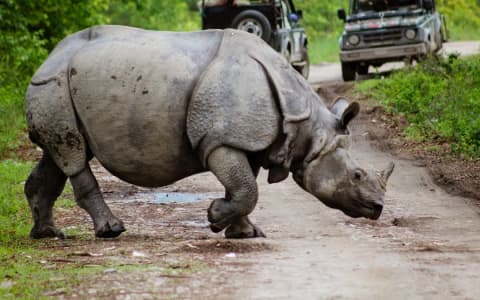
Jeep Safari in Western Range, Kaziranga
The ultimate destination for One-horned Rhino sightings.
67m ASL

Jeep Safari in Central Range, Kaziranga
Ride through the core marshy floodplains of the Kohora range.
65m ASL

Jeep Safari in Eastern Range, Kaziranga
Quiet woodlands and exceptional birding around Sohola Beel.
80m ASL

Jeep Safari in Burapahar Range, Kaziranga
Track Hoolock Gibbons and Capped Langurs through hilly broadleaf forests in Kaziranga's remote westernmost beat.
75m ASL

Elephant Safari in Western Range
Dawn patrol on elephant-back to track rhinos closely in Bagori.
67m ASL
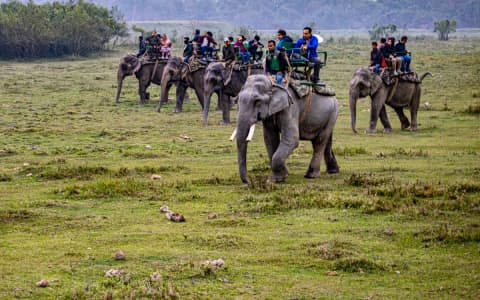
Elephant Safari in Central Range
Track wild rhinos silently at sunrise from the Mihimukh riding tower.
65m ASL
Best Time to Visit
Best time of day: 6:30 AM to 8:30 AM
Visitor Specs
Single morning shift, daily during the open season (November to April).
How to Reach
Altitude & Terrain
7-Day Tawang Tour Package from Guwahati: Dirang, Sangti & Shergaon
Mountains & Monpas: A Curated Himalayan Journey
Location
Lng: 93.635800
Plan Your Trip to Kaziranga with Nezo
Combine Panbari Reserve Forest, Kaziranga with living tribal heritage, scenic mountain vistas, and handpicked local stays on a private guided journey.