
Guwahati (Pragjyotishpur)
Updated 2026The Brahmaputra Riverfront Metropolis & Sacred Gateway to Northeast India
| Category | Detail |
|---|---|
| Altitude / Elevation | 55 meters (180 ft) |
| District | Kamrup Metropolitan District, Assam |
| Driving To Kaziranga | 215 km (4 to 4.5 hours via NH27 & NH715) |
| Driving To Shillong | 100 km (2.5 to 3 hours via NH6 four-lane expressway) |
| Nearest Airport | Lokpriya Gopinath Bordoloi International Airport (GAU / Borjhar) |
| Permit Requirement | No permit required (Assam is 100% permit-free for domestic and foreign travelers) |
| River Island | Umananda Island (Peacock Island — World's smallest inhabited river island) |
| Riverfront | Brahmaputra River (1.2 km to 3 km channel width) |
| Spiritual Significance | Kamakhya Temple (Supreme Shakti Peeth on Nilachal Hill) |
Guwahati (Pragjyotishpur) is the premier metropolis and commercial gateway of Northeast India, situated along the Brahmaputra River in Kamrup Metropolitan District, Assam, at an altitude of 55 meters. Located 100 km north of Shillong and 215 km west of Kaziranga, it is home to the sacred Kamakhya Temple on Nilachal Hill, Umananda River Island, and the Deepor Beel Ramsar wetland.
Morning river mist curls off the vast, sweeping currents of the Brahmaputra River, carrying the crisp scent of damp alluvial loam and freshly pressed mustard oil from the busy alleys of Fancy Bazaar. The deep, resonant resonance of temple conch shells and Vedic chants descends from the ancient granite heights of Kamakhya Temple atop Nilachal Hill, while passenger ferries cut through golden water gilded by the first rays of the eastern sun.
Guwahati and the state of Assam are completely open and permit-free for all domestic Indian citizens and international travelers. No entry permits are required to enter the state. Specific attraction entry tickets apply at monuments, museums, and national parks (e.g. Kamakhya Temple VIP darshan passes, Kalakshetra entry tickets, Brahmaputra ropeway tickets).
Geography, Urban Granite Hills & Brahmaputra Floodplain Hydrology
Guwahati (Pragjyotishpur) is the premier metropolis, cultural capital, and commercial gateway of Northeast India, situated on the southern banks of the mighty Brahmaputra River in the Kamrup Metropolitan District of Assam at an altitude of 55 meters (180 feet) above sea level. Located 100 km north of Shillong and 215 km west of Kaziranga, Guwahati anchors the transportation and economic corridors connecting all eight northeastern states to mainland India.
The physical geography of Guwahati is dramatically shaped by the interplay between the sweeping alluvial floodplains of the Brahmaputra River and ancient Precambrian granite monadnocks—rugged, forested hillocks rising sharply from the valley floor. Signature geological features include:
- Nilachal Hill (160 meters): An ancient granite horst rising on the western riverfront, crowned by the sacred Kamakhya Temple complex.
- Chitrasal / Chitrachal Hill: Perched above the central riverfront, home to the ancient planetary observatory of Navagraha Temple.
- Sarania Hill: Elevated ridge overlooking the city center, hosting the historic Gandhi Mandap.
- Itakhuli & Sukreswar Hills: Granite river promontories framing the historic riverfront ghats.
Hydrologically, the Brahmaputra River at Guwahati narrows through a geological constriction between the granite bluffs of North and South Guwahati, spanning between 1.2 kilometers at the Saraighat Bridge to over 3 kilometers along the eastern riverfront. This dynamic river system sustains several riverine islands, including Umananda Island (Peacock Island)—the smallest permanently inhabited river island in the world—and the sacred rocky outcrop of Urvashi Island.
On the city's southwestern perimeter lies Deepor Beel, a 40 square kilometer permanent freshwater lake and wetland designated as a Ramsar Site in 2002. Fed by the Basistha and Kalmani river systems, Deepor Beel acts as a natural storm-water reservoir for the city and harbors over 200 avian species alongside an active seasonal transit corridor for wild Asian elephants descending from the Rani and Garbhanga reserve forests.
Spiritual Antiquity: The Kamakhya Shakti Peeth & Nilachal Hill
Historically celebrated as Pragjyotishpur ("The City of Eastern Light & Astrology") in the Mahabharata and Kalika Purana, Guwahati has stood as a paramount center of spiritual devotion and royal power for more than two millennia. The spiritual epicenter of the region is the Kamakhya Temple, situated atop the lush granite crest of Nilachal Hill.
Kamakhya is venerated as the supreme shrine among the 51 sacred Shakti Peethas of Hinduism. According to mythological lore, when Lord Shiva performed the cosmic dance of destruction (Tandava) carrying the corpse of Goddess Sati, Lord Vishnu's Sudarshana Chakra dismembered the body, and Sati's Yoni (the seat of divine creative energy and fertility) fell atop Nilachal Hill.
Unlike conventional Hindu temples, the inner sanctum (Garbhagriha) of Kamakhya contains no anthropomorphic idol. Instead, devotees descend into a dark, subterranean natural cave chamber where a natural stone fissure fed by a perennial underground spring is venerated as the sacred Yoni.
Nilachal Architectural Style & Historical Reconstruction
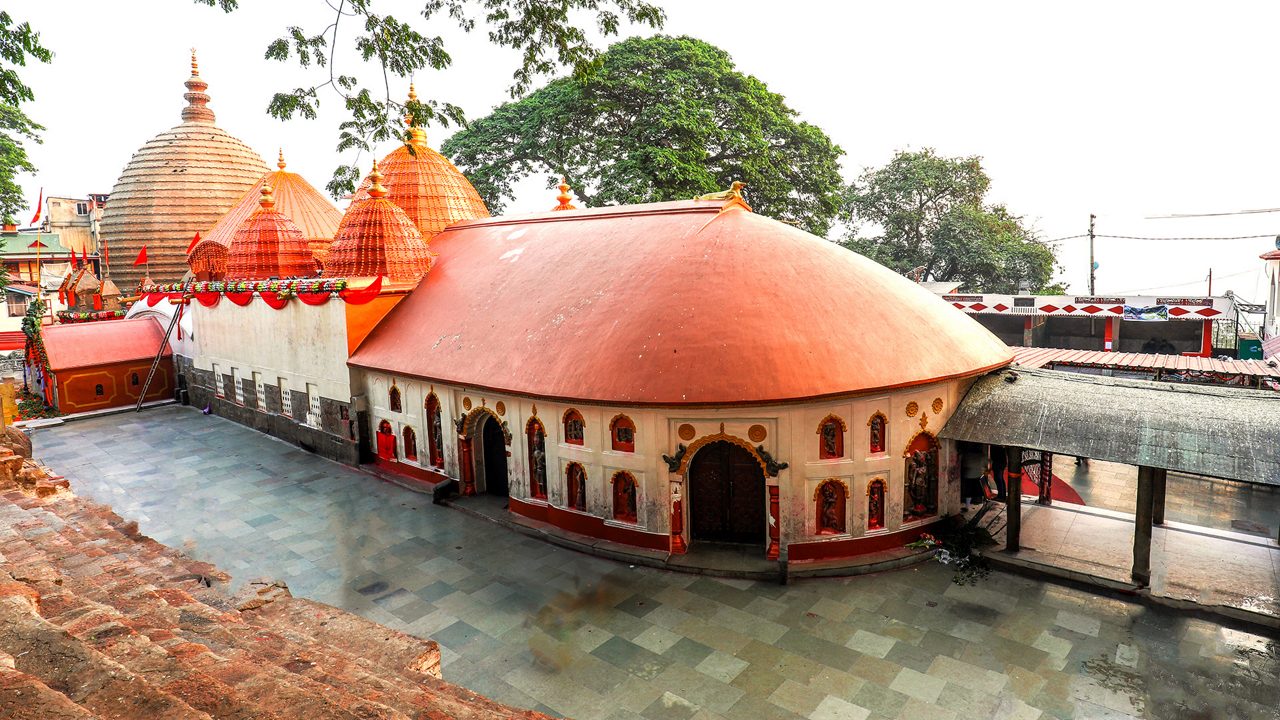
The temple's architectural silhouette represents the unique Nilachal Style—a hybrid design combining traditional indigenous Assamese shikhara profiles with octagonal domes and beehive-shaped ridged spires. Rebuilt in 1565 CE by the Koch Dynasty under King Nara Narayan and his legendary commander General Chilarai following earlier destruction, the temple complex was later extensively expanded and patronized by the Ahom kings (most notably Rudra Singha and Siva Singha). Surrounding the main shrine are ten independent temples dedicated to the Dasa Mahavidyas (the Ten Tantric Wisdom Goddesses): Kali, Tara, Shodashi, Bhuvaneshwari, Bhairavi, Chhinnamasta, Dhumavati, Bagalamukhi, Matangi, and Kamalatmika.
The Sacred Ambubachi Mela
Every year during the monsoon month of Aahar (mid-June, typically June 21 to 25), Kamakhya hosts the world-famous Ambubachi Mela. The festival commemorates the annual menstruation cycle of Mother Earth and Goddess Kamakhya. During the first three days, the temple doors remain closed to all devotees while the waters of the subterranean spring are said to turn red with vermilion. On the fourth day, the temple sanctum reopens amidst the blowing of conch shells and chanting of lakhs of pilgrims, Tantric sadhus, and Aghoris who gather from across India to receive small sanctified strips of the red cloth (Raktavastra).
Riverine Wonders: Umananda Island & The Brahmaputra Ropeway
Guwahati's identity is inextricably bound to the waters of the Brahmaputra, offering two premier riverine landmarks:
1. Umananda Island (Peacock Island) & Shiva Temple
Perched directly in the middle of the river current opposite the Kachari riverbank, Umananda Island is recognized as the smallest inhabited river island in the world. Named Peacock Island by British colonial administrator Mr. Yule due to its avian-like topographical shape, the island houses the revered Umananda Temple, dedicated to Lord Shiva.
Constructed in 1694 CE by Ahom King Gadadhar Singha, the temple features intricate stone sculptures depicting Vishnu, Surya, Shiva, Ganesha, and Devi. Historically, Umananda was famous as one of the last natural habitats of the endangered Golden Langur (Trachypithecus geei), introduced to the island in the 20th century. Visitors reach the island via a 10-minute motorized passenger ferry ride from Sukreswar Ghat or Uzanbazar.
2. The Guwahati River Ropeway
Inaugurated in 2020, the Guwahati River Ropeway is India's longest bi-cable passenger ropeway across a river, spanning 1.82 kilometers (1.13 miles) from Kachari Ghat in Panbazar (South Guwahati) to Rajaduar in North Guwahati. Gliding 30 meters above the roaring waters of the Brahmaputra in an 8-minute aerial crossing, the cable car offers breathtaking 360-degree panoramic views of Umananda Island, Urvashi Island, the sweeping river channel, and the forested hills surrounding the metropolitan skyline.
3. Sunset & Dinner Cruises
Boarding from Fancy Bazaar and Machkhowa Ghats, luxurious multi-deck vessels (such as Alfresco Grand and MV Mahabaahu) conduct daily 2-hour Brahmaputra Sunset and Dinner Cruises. Sailing upstream as the sun sets behind the Nilachal ridge, guests enjoy live Assamese folk Bihu dance performances, traditional music, and authentic cuisine while watching river dolphins (Platanista gangetica) surface in the dusk waters.
Cultural Epics: Srimanta Sankardeva Kalakshetra & Assam State Museum
Guwahati serves as the intellectual and cultural showcase of the entire northeast through world-class institutions:
1. Srimanta Sankardeva Kalakshetra
Spanning over 20 hectares in Panjabari, this grand cultural academy is dedicated to the legacy of the 15th-century Vaishnavite polymath, saint, and social reformer Srimanta Sankardeva. The complex houses:
- Central Museum: Showcasing rare traditional artifacts, bell-metal works, musical instruments (Khol, Pepa, Taal), and royal textiles representing all indigenous tribes of Assam.
- Sankardeva Art Gallery: Exhibiting classical Satriya dance masks, ancient illuminated manuscripts (Sanchi Paat), and contemporary Northeast artwork.
- Heritage Artisan Village: Recreating authentic rural Assamese, Mishing, Karbi, Bodo, and Dimasa tribal architecture where master weavers demonstrate silk weaving on traditional wooden looms.
- Dr. Bhupen Hazarika Museum: Preserving the personal awards, harmonium, compositions, and memorabilia of the legendary musical maestro and Bharat Ratna awardee.
2. Assam State Museum & Dighalipukhuri
Situated on the southern shore of the historic Dighalipukhuri lake (a man-made royal canal dating to the ancient Mahabharata era of King Bhagadatta), the Assam State Museum is one of the oldest and richest museums in eastern India. Established in 1940, its galleries exhibit 5th to 12th-century stone and bronze sculptures from the Kamarupa Kingdom, royal Ahom copper plates, medieval cannons, and British colonial artifacts.
Wetland Ecology: Deepor Beel & The Pobitora Rhino Gateway
Beyond its urban core, Guwahati provides immediate access to premier wildlife ecosystems:
1. Deepor Beel Wetland Sanctuary
Located 13 km southwest of the city center, Deepor Beel is a vast freshwater wetland covering 40 square kilometers (with a 4.14 sq km designated bird sanctuary core). It is one of the largest natural river basins (beels) in lower Assam. Renowned as a prime ornithological haven, it supports over 200 species of resident and migratory birds, including large breeding colonies of the globally threatened Greater Adjutant Stork (Hargila), Lesser Adjutant Stork, Spot-billed Pelican, and Baer's Pochard. The wetland also serves as a vital ecological corridor where wild Asian elephants descend from the Garo and Khasi foothills to bathe and feed on aquatic weeds.
2. Pobitora Wildlife Sanctuary (Day-Trip Safari Gateway)
Situated just 48 km east of Guwahati (a scenic 1.5-hour drive via Chandrapur and Mayong), Pobitora Wildlife Sanctuary holds the highest ecological density of the Great Indian One-horned Rhinoceros in the world. Spanning 38.8 square kilometers (with a 16 sq km core grassland habitat), Pobitora shelters over 107 rhinos, allowing visitors to experience thrilling 1-hour early morning elephant safaris and 2-hour open-top 4x4 Jeep safaris before returning to Guwahati for dinner.
When Is the Best Time to Visit Guwahati?
Guwahati experiences a subtropical climate characterized by three distinct seasons:
- Winter (October to April): The optimal travel season. Weather is dry, crisp, and sunny with daytime temperatures ranging between 15°C and 26°C, and cool night temperatures dipping to 10°C–14°C. This window is ideal for Kamakhya darshan, river cruising, open-air Kalakshetra walking tours, and onward journeys to Shillong, Kaziranga, and Tawang. High tourist season coincides with major regional festivals like Kati Bihu (October), Magh Bihu (January), and Rongali Bihu (April).
- Summer (May to June): Warm and humid with daytime temperatures reaching 32°C to 36°C. June brings the massive pilgrimage crowd of the Ambubachi Mela.
- Monsoon (July to September): Characterized by torrential seasonal downpours averaging 1,600 to 1,800 mm annually. The Brahmaputra River swells significantly, submerging low-lying river islands and causing occasional urban waterlogging along low-lying city corridors like Zoo Road and GS Road.
How to Reach Guwahati & Northeast Transit Logistics
- By Air: Lokpriya Gopinath Bordoloi International Airport (GAU / Borjhar) is located 22 km west of central Guwahati. It is the primary aviation hub of Northeast India, offering dozens of daily direct flights to New Delhi, Mumbai, Kolkata, Bengaluru, Hyderabad, Chennai, and regional flights connecting all seven sister states.
- By Rail: Guwahati Railway Station (GHY) in Paltan Bazaar and Kamakhya Junction (KYQ) are the central broad-gauge railheads of the Northeast Frontier Railway (NFR). Premium superfast trains—including the Vande Bharat Express (to New Jalpaiguri), Rajdhani Express, and Saraighat Express—connect Guwahati directly to Kolkata, New Delhi, and major Indian cities.
- By Road: Guwahati is the nexus of National Highway 27 (NH27 - East-West Corridor) and National Highway 6 (NH6). Smooth, multi-lane highways lead south to Shillong (100 km / 2.5 to 3 hours via the Guwahati-Shillong 4-lane expressway), east to Kaziranga National Park (215 km / 4.5 hours), and northeast to Tezpur (175 km / 3.5 hours).
Local Food Culture & Authentic Assamese Dining
Dining in Guwahati is a celebration of authentic Assamese culinary traditions, centered on subtle natural flavors, minimal dried spices, cold-pressed mustard oil, and indigenous herbs. Traditional meals are served with great reverence in gleaming bell-metal (Kahi-Bati) tableware from Sarthebari.
Signature Assamese culinary highlights include:
- Khar: The canonical opening course of an Assamese meal. Prepared by filtering water through the ashes of sun-dried banana peels (Kola Khar), this alkaline broth is simmered with raw papaya, pulses, or fresh fish heads to cleanse the palate.
- Masor Tenga: The iconic Assamese sour fish curry. Fresh river fish (such as Rohu, Chitol, or Borali) is simmered in a light, refreshing golden broth flavored with Kaji Nemu (Assam's GI-tagged oval lemon), Thekera (Garcinia pedunculata), elephant apple (Ou Tenga), or garden tomatoes.
- Hahor Mangxo kumura diya: Rich, slow-cooked country duck curry prepared with winter ash gourd (kumura), cracked black peppercorns, crushed ginger, and whole coriander.
- Pitika: The comforting Assamese soul food consisting of roasted or boiled ingredients mashed with pungent raw mustard oil, chopped shallots, and green chillies—including Aloo Pitika (potato), Bengena Pitika (roasted eggplant), and Khorisa Pitika (fermented bamboo shoot).
- Jolpan & Pitha: The traditional Assamese breakfast and teatime feast. Features Boka Saul (the unique indigenous "magic rice" that requires no cooking, only soaking in cold water), Komal Saul, flattened rice (Chira), thick buffalo curd (Doi), and liquid palm jaggery (Jola Gur), accompanied by freshly roasted Til Pitha (crispy rice rolls filled with sesame and jaggery) and Ghila Pitha.
Celebrated traditional dining restaurants in Guwahati include Paradise Restaurant (Silpukhuri), Gam's Delicacy (Beltola), Khorikaa (GS Road), Heritage Khorikaa, and Maihang.
Practical Travel Guide (The Honest Guide)
- Permit Regulations: Assam is 100% open and permit-free for all domestic Indian citizens and international travelers. No entry permits are required to enter, stay in, or travel through Guwahati. Standard government photo ID (Aadhaar, Passport, Voter ID) is sufficient for all hotel check-ins and transit.
- Kamakhya Temple Darshan Realities: General darshan lines during weekends, festivals, and holidays can take 4 to 7 hours. Devotees can purchase special VIP Darshan tickets (₹501 per head) at the counter or via the official Devalaya website to reduce waiting time to 1.5 to 3 hours. Modest attire covering shoulders and knees is strictly enforced; leather items (belts, wallets, shoes) and smartphones are strictly prohibited inside the inner cave sanctum.
- Traffic Bottlenecks: Central corridors along GS Road (Khanapara–Ganeshguri–Paltan Bazaar) and the Jalukbari roundabout experience heavy vehicular congestion during morning rush hours (08:30 to 10:30) and evening peak hours (17:30 to 20:30). When catching flights at GAU Airport, always allow at least 1.5 to 2 hours of transit time from central city hotels.
- Digital Payments & Cash: Digital transactions via UPI (Google Pay, PhonePe, Paytm) and credit cards are universally accepted across hotels, restaurants, and shopping malls. Carry a modest cash amount (₹1,500 to ₹2,000) for local ferry tickets to Umananda, auto-rickshaws, and traditional silk shopping in Fancy Bazaar and Sualkuchi.
- Mobile Network Reliability: Airtel and Jio provide high-speed 5G connectivity throughout the metropolitan area, airport, railway stations, and along the NH6 expressway toward Shillong.
Guwahati is part of the breathtaking Northeast India region, known for its pristine natural beauty, rich tribal culture, and unique biodiversity.
TRAVEL PLANNING
Plan Your Visit
Essential guides to prepare for your trip
Itineraries & Trips
Curated 3-day, 5-day & 7-day trip routes
Places to Visit
Top waterfalls, viewpoints & landmarks
Best Time to Visit
When to go for the best experience
How to Reach
Flights, trains, taxis and road options
Where to Stay
Homestays, eco-lodges & resorts
Festivals & Events
Cultural celebrations & seasonal events
Guwahati Tour Packages
Ready-to-book Guwahati tours
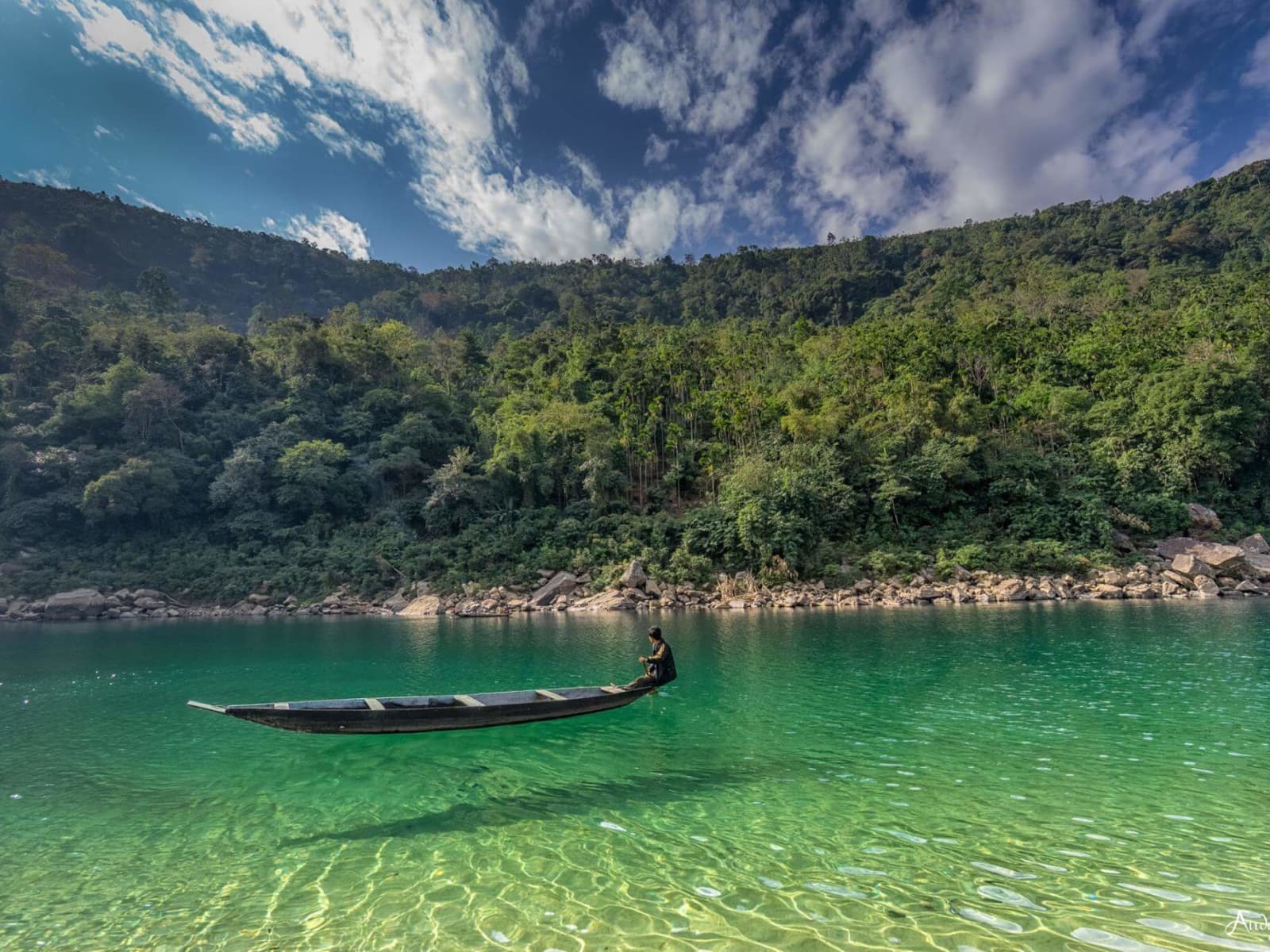

Need a Custom Plan?
As Assam locals, we'll plan your journey across the Brahmaputra Valley.
Talk to an ExpertTOP ATTRACTIONS
Places to Visit in Guwahati
Must-see attractions and hidden gems across Guwahati


- Kamakhya Temple: The ancient Nilachal seat of Tantric power and the bleeding goddess Kamakhya.
- Brahmaputra River Cruise: The iconic river cruise experience on the Brahmaputra in Guwahati aboard Alfresco Grand
How Many Days in Guwahati?
Plan your own route — or let us handle everything
Things to Do in Guwahati
Curated experiences and activities across Guwahati by local experts
Where to Stay in Guwahati
Verified stays in Guwahati with local character


Getting Around
Safe, reliable transfers and car hire in Guwahati
Practical Travel Realities & Local Tips
Terrain, ground rules, and essential preparation for Guwahati
Guwahati is an Easy lowland riverine destination situated at an altitude of 55 meters. Most attractions feature paved roads and flat terrain, though exploring Kamakhya Temple on Nilachal Hill involves walking up paved stone stairs and negotiating crowded courtyards.
Local Culinary Traditions & Food
Authentic indigenous gastronomy, tribal flavours, and culinary culture in Guwahati
Guwahati's culinary scene celebrates authentic Assamese cuisine with minimal spices, aromatic wild herbs, and fresh river catches. Signature dishes include Khaar (alkaline papaya starter), Masor Tenga (tangy sour fish curry with elephant apple or thekera), Kumdora Di Hah (duck curry with ash gourd), Pitika (mashed potato/eggplant with raw mustard oil), and Jolpan (sticky rice served with curd and palm jaggery).
Combine Guwahati With
Extend your trip with nearby destinations
Travel Guides
Expert guides for Guwahati
Reviews
"Nezo Tours organized our fantastic trip. The team was attentive and flexible, accommodating last-minute changes to suit our needs."
Yamini Peter
Mumbai, Maharashtra
"We got the best service than expected. The guide was very friendly and very very helpful, throughout our journey he guided us."
Ammiel Shabong
Shillong, Meghalaya
"Service was excellent. Prices were the best compared to those offered by others. All in all a satisfying experience. Definitely recommended."
Pradeep Agarwal
Delhi, India
PLAN YOUR TRIP
FAQs
Can't find the answer you're looking for? Our expert travel team is always on hand to help you plan the perfect Guwahati experience.
Ready to Explore Guwahati?
Let our local experts help you plan the perfect trip. Get personalized recommendations and instant quotes.