
Kohima (Kewhima)
Updated 2026Capital of Nagaland & Angami Heartland Perched on Historic Ridge Heights
| Category | Detail |
|---|---|
| Altitude / Elevation | 1,444 meters (4,738 ft) |
| Best Time to Visit | October to May (Hornbill Festival: Dec 1–10; Sekrenyi: Late Feb) |
| Coordinates | 25.6751° N, 94.1086° E |
| District | Kohima District, Nagaland |
| Driving From Dimapur | 74 km (2.5 – 3.5 hours via 4-lane NH29) |
| Nearest Airport | Dimapur Airport (DMU) — 74 km |
| Nearest Railhead | Dimapur Railway Station (DMV) — 74 km (Zubza railhead under construction) |
| Permit Requirement | Inner Line Permit (ILP) mandatory for all domestic Indian citizens; Foreigners register with FRO/SP within 24 hours |
| Population | approx. 115,000 (Metropolitan Area) |
| Primary Tribe | Angami Naga (Southern, Northern, Western & Eastern Khels) |
Kohima is the hillside capital of Nagaland perched at an elevation of 1,444 meters (4,738 feet) along the crest of the Barail Range. Renowned as the political, historical, and cultural heartland of the Angami Naga people, it is globally celebrated for the historic 1944 Battle of Kohima ('the Stalingrad of the East'), the grand annual Hornbill Festival held each December at Kisama Heritage Village, the monumental Mary Help of Christians Cathedral on Aradurah Hill, and its strategic role as the premier staging gateway to Khonoma Green Village and the alpine wilderness of Dzukou Valley.
The crisp mountain air at dawn carries the pungent, comforting fragrance of burning alder wood smoke and brewing wild herbal teas across the steep ridges of Kohima. Below the mist-draped summit of Mount Japfü, the terraced slopes of the Commonwealth War Cemetery rest in solemn stillness, framed by vibrant cherry blossoms and ancient Angami carved clan gates, while the distant rhythm of traditional log drums and choral harmonies echoes through the winding mountain valleys.
Inner Line Permit (ILP) is legally mandatory for all domestic Indian non-residents of Nagaland under the Bengal Eastern Frontier Regulation 1873. Apply online at ilp.nagaland.gov.in (₹200 per person for 30-day tourist ILP, ₹500 for foreign tourists). Physical printed copies must be presented at the Chumoukedima checkpost along NH29. Foreign nationals do not require an ILP or central PAP under relaxed MHA norms, but must complete mandatory registration with the Foreigners Registration Officer (FRO) / SP Office in Kohima within 24 hours of arrival (excluding citizens of Pakistan, China, and Afghanistan who require prior MHA approval).
Geography, Ridge Topography & Montane Environment (1,444 m)
Kohima, the historic capital of Nagaland, sits atop an undulating saddle ridge in the southern Barail mountain range at a mean elevation of 1,444 meters (4,738 feet) above sea level. Located at coordinates 25.6751° N, 94.1086° E, the city spreads across high mountain crests and precipitous slopes dominated to the south by the imposing mass of Mount Japfü (3,048 m)—Nagaland’s second-highest summit—and the protected cloud forests of Pulie Badze Wildlife Sanctuary. The original Angami settlement was christened Kewhima, named after Kewhi, an indigenous, fragrant wild flowering shrub that blankets the high hill slopes in spring.
The topography of Kohima is defined by sharp elevation gradients. The city is constructed along narrow, stepped mountain spurs where public staircases, stone switchbacks, and high concrete viaducts connect lower municipal valleys to high administrative ridgelines such as Garrison Hill, Aradurah Hill, and Bayavü Hill. The climate is temperate and montane: autumn and winter (October to March) bring crystal-clear Himalayan skies, invigorating daytime temperatures between 14°C and 20°C, and crisp, chilly nights where temperatures plunge to 4°C–7°C. The southwest monsoon (June to September) delivers over 1,800 mm of heavy rainfall, shrouding the surrounding pine and alder valleys in rolling sea-mists and feeding lush wet-rice agricultural terraces.
The 1944 Battle of Kohima & The Commonwealth War Cemetery
Kohima occupies an indelible place in modern military history as the turning point of World War II in the Asian theater. Between April 4 and June 22, 1944, British Commonwealth forces—comprising the British 2nd Division, the Indian 161st Infantry Brigade, and the 1st Assam Regiment—clashed in ferocious hand-to-hand combat against Lieutenant-General Kotoku Sato’s Japanese 31st Division during Operation U-Go. Voted by Britain’s National Army Museum as 'Britain's Greatest Battle' (surpassing both Waterloo and D-Day), the Siege of Kohima thwarted Imperial Japan’s invasion of British India.
The focal point of this desperate struggle took place on the terraced hillside of the British Deputy Commissioner Charles Pawsey’s private residence, specifically across the DC's Bungalow Tennis Court. For several weeks, Allied soldiers and Japanese troops were locked in combat separated only by the width of the tennis court's white baseline. Today, the Commonwealth War Cemetery on Garrison Hill stands upon this hallowed ground. Maintained with impeccable precision by the Commonwealth War Graves Commission, its emerald terraced lawns harbor the bronze grave markers of 1,420 Commonwealth soldiers, alongside a memorial commemorating 917 Hindu and Sikh soldiers cremated in accordance with their religious rites.
At the base of the terraced gardens stands the stone obelisk of the 2nd Division Memorial, engraved with the immortal Kohima Epitaph composed by English classicist John Maxwell Edmonds:
"When you go home, tell them of us and say, For your tomorrow, we gave our today."
Bara Basti & Ancestral Angami Clan Heritage (The Four Khels)
Perched on a high ridge overlooking the modern municipal sprawl lies Kohima Village, locally known as Bara Basti (Kewhima). Historically recognized as the second-largest traditional village settlement in Asia, Bara Basti represents the spiritual and ancestral heartland of the Angami Naga tribe. The village is organized into four ancestral khels (clan subdivisions)—Tsütuonuomia (T-Khel), Lhisemia (L-Khel), Dapfhütsumia (D-Khel), and Pfuchatsumia (P-Khel)—each functioning with its own democratic council, communal stone assembly platforms (Dahu), and ceremonial institutions.
Walking through the narrow cobblestone alleyways of Bara Basti reveals authentic timber architecture. Each clan entrance is guarded by a massive, hand-carved wooden gate (Kharu), hewn from single slabs of solid hardwood and intricately sculpted with motifs of Mithun (Bos frontalis) horns (symbolizing prosperity), human warrior figures (symbolizing valor), and round shields. At the center of the khels stand traditional Morungs (ancestral youth academies and male dormitories), whose towering wooden gables are adorned with crossed wooden horn carvings (Kika). In former eras, the Morung served as the vital educational citadel where oral histories, customary clan laws, warrior tactics, woodcraft, and polyphonic folk songs were passed down through generations.
Kisama Naga Heritage Village & The Hornbill Festival
Located 12 km south of Kohima along National Highway 29 at the foot of Mount Japfü, Kisama Naga Heritage Village is the permanent cultural amphitheater of Nagaland. Designed as a living open-air museum, Kisama features 17 authentic, full-scale traditional houses and Morungs representing all 17 officially recognized indigenous tribes of the state—including the Angami, Ao, Konyak, Sumi, Lotha, Chakhesang, Rengma, Chang, Khiamniungan, Phom, Pochury, Sangtam, Yimkhiung, Zeliang, Kuki, and Tikhir.
Every year from December 1 to December 10, Kisama hosts the world-renowned Hornbill Festival ('The Festival of Festivals'). Inaugurated in the year 2000 by the Government of Nagaland to foster inter-tribal unity and celebrate indigenous heritage, the festival gathers thousands of tribal elders, warrior dancers, folk musicians, and master craftsmen in full ancestral regalia—featuring hornbill feather headdresses, hand-woven clan shawls, boar-tusk neckpieces, and brass warrior pendants. Visitors witness breathtaking traditional warrior dances, indigenous archery and wrestling contests, traditional log drum synchronization, the international Hornbill Rock Music Festival, and traditional chili-eating competitions featuring the fiery Naga King Chilli (Bhut Jolokia).
Sacred Architecture: Mary Help of Christians Cathedral on Aradurah Hill
Rising majestically above the southern skyline on Aradurah Hill, the Mary Help of Christians Cathedral serves as the ecclesiastical seat of the Roman Catholic Diocese of Kohima. Consecrated in 1991, the cathedral is an architectural masterpiece that seamlessly marries modern European ecclesiastical design with traditional indigenous Naga vernacular architecture. The cathedral’s soaring, curved roofline directly mirrors the sloping eaves of a traditional Angami Morung, allowing the structure to blend harmoniously into the surrounding pine-clad ridge.
The interior of the cathedral is illuminated by magnificent floor-to-ceiling stained-glass windows depicting biblical scenes and the spread of faith across the Naga Hills. At its altar hangs a 16-foot hand-carved wooden crucifix, celebrated as one of the largest carved wooden crucifixes in Asia, sculpted from a single solid block of local timber. Notably, the construction of the cathedral was supported in part by Japanese benefactors and war veterans as a sacred act of international reconciliation and lasting prayer for the souls of all soldiers who perished on the battlefields of Kohima in 1944. From its broad stone piazza, travelers enjoy an unobstructed 360-degree panoramic vista sweeping across Kohima town, Garrison Hill, and the deep southern valleys.
Nagaland State Museum & Living Tribal Material Culture
Situated on Bayavü Hill, approximately 2 km north of the city center, the Nagaland State Museum provides the definitive ethnographic repository of the Naga peoples. The museum houses an extraordinary collection of material culture, anthropological artifacts, and historical treasures assembled from remote hill districts.
Key exhibits include:
- Ancestral Log Drums (Tsing-kong): Gigantic, hollowed-out tree-trunk log drums measuring over 30 feet in length, carved from single massive jungle trees and formerly used as sonic telegraphs to signal alarms, harvest celebrations, and warrior victories across mountain valleys.
- Ceremonial Tribal Regalia & Textiles: Intricately woven traditional shawls—such as the Angami Lorâmhü, the Ao Tsungkotepsu (warrior shawl painted with animal figures), and the Lotha Chon Dha—exhibiting strict geometric clan markers, natural vegetable dyes, and hand-spun indigenous cotton.
- Warrior Weapons & Metalcraft: Ancestral daos (broadsword machetes), iron-tipped hunting spears wrapped in dyed goat hair, cowrie-shell body armor, and authentic brass neck collars.
- Prehistoric Megaliths & Dioramas: Exhibits detailing the ancient 'Feast of Merit' megalithic culture, wherein wealthy village leaders erected giant stone monoliths to distribute wealth to the community.
Ecological Gateways: Mount Japfü, Pulie Badze & Khonoma Green Village
Beyond its urban limits, Kohima serves as the launching pad for world-class high-altitude trekking and indigenous community conservation reserves:
- Mount Japfü Summit (3,048 m): Located 15 km south of Kohima, Japfü is the second-highest peak in Nagaland. The strenuous 5-to-6 hour mountain ascent climbs through dense subtropical bamboo rainforests and giant rhododendron canopies. In 1993, the Guinness Book of World Records officially certified a 108-foot (33-meter) Rhododendron arboreum tree on the upper slopes of Mount Japfü as the tallest rhododendron tree on Earth. The summit rewards trekkers with breathtaking panoramic views across the snow-capped Barail range and the distant lowlands of Assam.
- Pulie Badze Wildlife Sanctuary: Spanning 9.23 square kilometers of high-altitude primary cloud forest above Jotsoma village, this pristine sanctuary serves as an essential watershed for Kohima and a vital habitat for endangered avian species, including the vulnerable Blyth’s Tragopan (Tragopan blythii) (the state bird of Nagaland), the Dark-rumped Swift, and rare mountain laughingthrushes.
- Khonoma Green Village (20 km west): A 700-year-old Angami settlement celebrated as Asia’s First Green Village. In 1998, Khonoma banned commercial logging and hunting to establish the 20 sq km Khonoma Nature Conservation and Tragopan Sanctuary (KNCTS). The village is also renowned for its historic 1879 Anglo-Naga battle forts (Semoma Fort) and sustainable, centuries-old Nepalese Alder (Alnus nepalensis) agroforestry terraces that naturally fix soil nitrogen.
Indigenous Hearth Flavors & Fermented Traditions
The traditional food culture of Kohima is an authentic, ancestral culinary tradition defined by open woodfire smoke preservation, wild forest foraging, and distinctive microbial fermentation, completely free from commercial powdered spices or artificial additives. Meals are prepared around indoor hearths (mezhü) that serve as the thermal and social heart of every Angami home.
Staple culinary traditions include:
- Galho: The quintessential Naga comfort dish—a wholesome, fragrant rice porridge simmered with indigenous unpolished red rice, tender seasonal wild greens (mustard leaves, mountain ginger, bitter herbs), and cured wood-smoked pork or seasoned lard. Vegetarian Galho prepared with fermented bamboo shoots and wild herbs is equally hearty and comforting.
- Smoked Pork with Axone (Akhuni): Tender strips of house-smoked pork braised with pungent fermented soybean paste (axone), fresh tomatoes, and fiery Naga King Chilli (Bhut Jolokia / Raja Mircha), delivering a profound savory umami depth.
- Bastenga (Fermented Bamboo Shoot) Broth: Shredded bamboo shoots naturally fermented in their own juices, braised with country chicken, river fish, or pork to create an invigorating, tart, and acidic clear broth.
- Naga Tree Tomato (Tamarillo) Chutney: Ripe tree tomatoes roasted over open embers, mashed with charred king chillies, raw mountain garlic, and fermented dry fish or roasted axone.
- Zutho: Traditional Angami fermented rice brew crafted from sticky rice using herbal yeast starter cakes (piezhu). It is frothy, milky-white, slightly sweet and sour with a low ABV (~3–5%), traditionally served in carved bamboo tumblers.
Transport Corridors, National Highway 29 & The Dhansiri–Zubza Rail Link
Kohima is linked to the commercial plains of Assam via the modernized four-lane National Highway 29 (NH29). Starting from the railhead and aviation hub of Dimapur (195 m), the highway ascends 74 km through the scenic Barail foothills past Chumoukedima, New Piphema, and Medziphema, reaching Kohima in 2.5 to 3.5 hours. To the south, National Highway 2 (NH2) forms the vital Asian Highway corridor connecting Kohima to Mao Gate, Senapati, and Imphal in Manipur (138 km, 4.5–5.5 hours).
Broad-Gauge Railway Expansion: Rail connectivity is undergoing a transformative upgrade through the construction of the 78.42 km broad-gauge Dhansiri–Kohima (Zubza) railway line (~41% physical progress as of 2026). Featuring 20 major tunnels and high viaduct bridges across complex seismic terrain, the project will bring direct broad-gauge passenger trains to Zubza (located just 16 km west of Kohima city) upon its target commissioning in December 2029, dramatically reducing transit times from Guwahati and Kolkata.
Practical Travel Intelligence: Inner Line Permits, Sunday Protocol & Local Etiquette
A successful journey to Kohima requires understanding essential highland protocols:
- Mandatory Inner Line Permit (ILP): Domestic Indian tourists must secure an online e-ILP via
ilp.nagaland.gov.inbefore arrival (fee: ₹200 per person for 30-day tourist ILP, ₹500 for foreign tourists). Physical paper printouts must be carried in vehicles for presentation at the Chumoukedima check gate along NH29. - Foreign National Registration (FRO): Under current relaxed Ministry of Home Affairs rules, foreign travelers do not require a Protected Area Permit (PAP) for Kohima, but must complete mandatory registration with the Foreigners Registration Officer (FRO) at the Kohima Police SP Office within 24 hours of arrival.
- Strict Sunday Commercial Shutdown: Over 90% of the population in Kohima practices Christianity. Sunday is observed as a strict day of Sabbath rest, family worship, and prayer. Commercial shops, private restaurants, markets, fuel stations, and public shared Sumos are completely closed. Ensure private transport and hotel meals are confirmed in advance if traveling on a Sunday.
- Cash Economy & Connectivity: While 4G/5G mobile connectivity (Jio and Airtel) is robust across Kohima city, surrounding valleys and trekking trails have intermittent connectivity. Always carry physical cash (₹3,000–₹5,000) for local market purchases, village homestays, and community conservation entry kiosks.
Kohima is part of the breathtaking Northeast India region, known for its pristine natural beauty, rich tribal culture, and unique biodiversity.
TRAVEL PLANNING
Plan Your Visit
Essential guides to prepare for your trip
Itineraries & Trips
Curated 3-day, 5-day & 7-day trip routes
Places to Visit
Top waterfalls, viewpoints & landmarks
Best Time to Visit
When to go for the best experience
How to Reach
Flights, trains, taxis and road options
Where to Stay
Homestays, eco-lodges & resorts
Permits & Entry
Required documents and ILP pass guidance
Kohima Tour Packages
Ready-to-book Kohima tours

Need a Custom Plan?
As Northeast India locals, we work directly with our trusted community drivers and homestay hosts.
Talk to an ExpertTOP ATTRACTIONS
Places to Visit in Kohima
Must-see attractions and hidden gems across Kohima
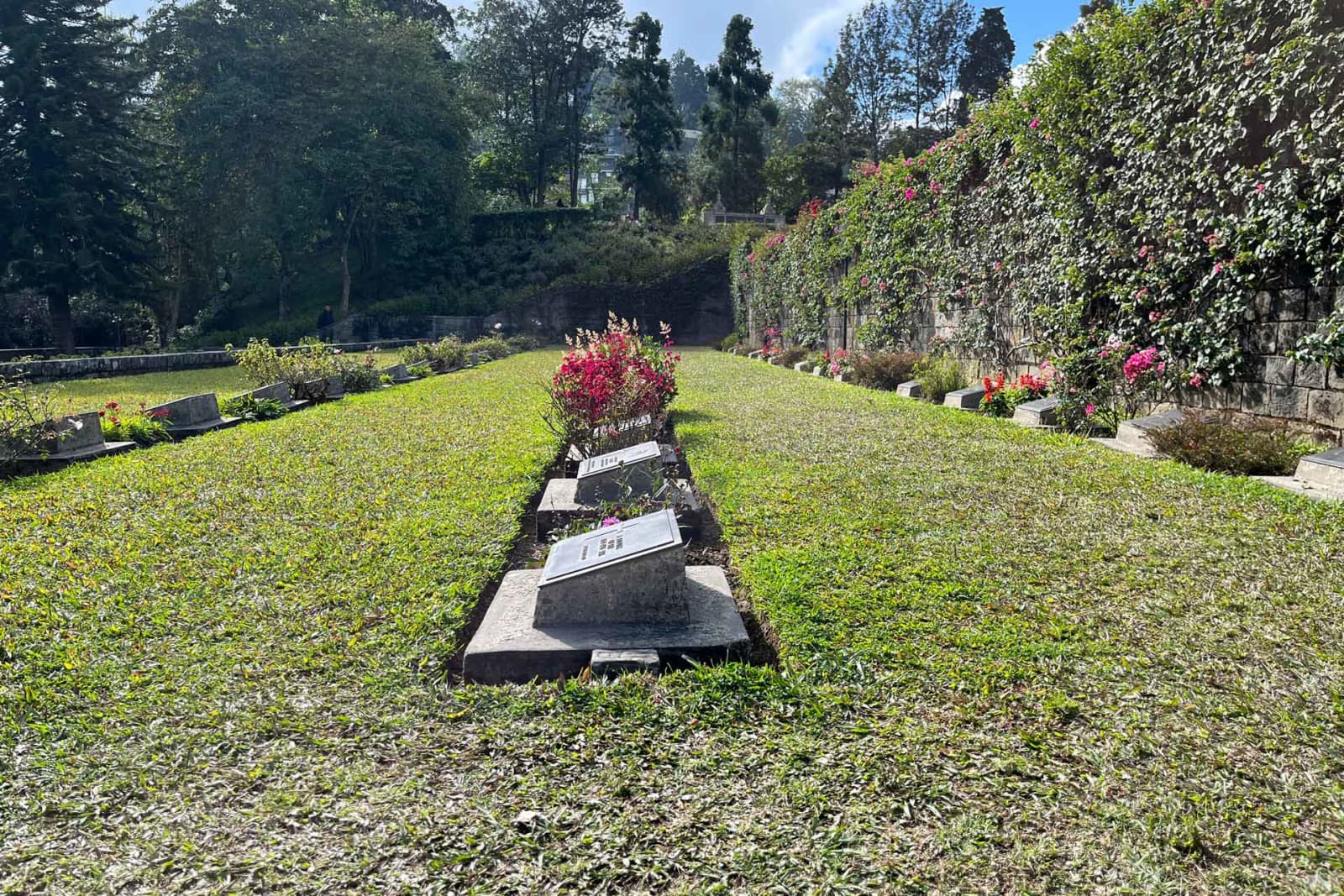
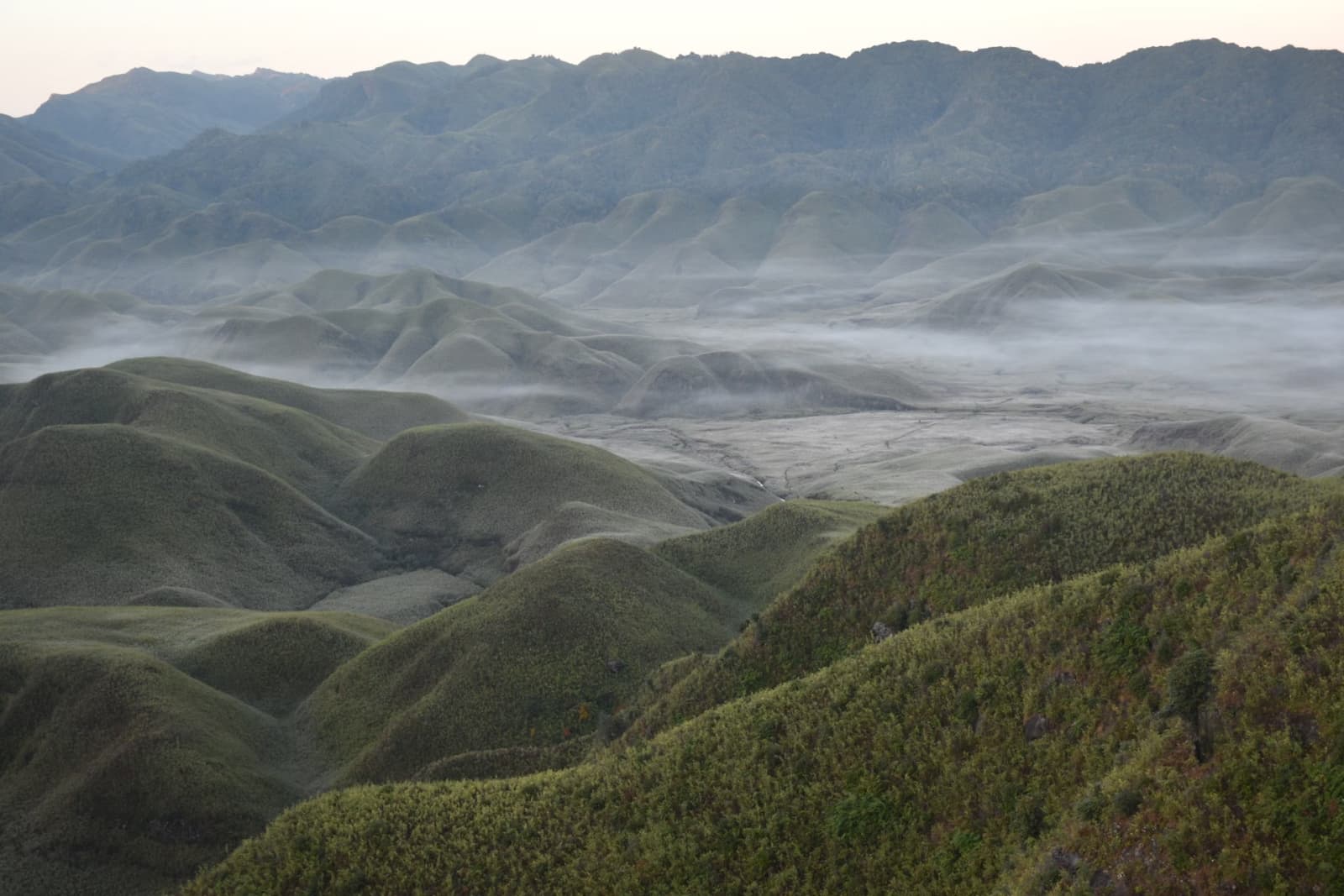
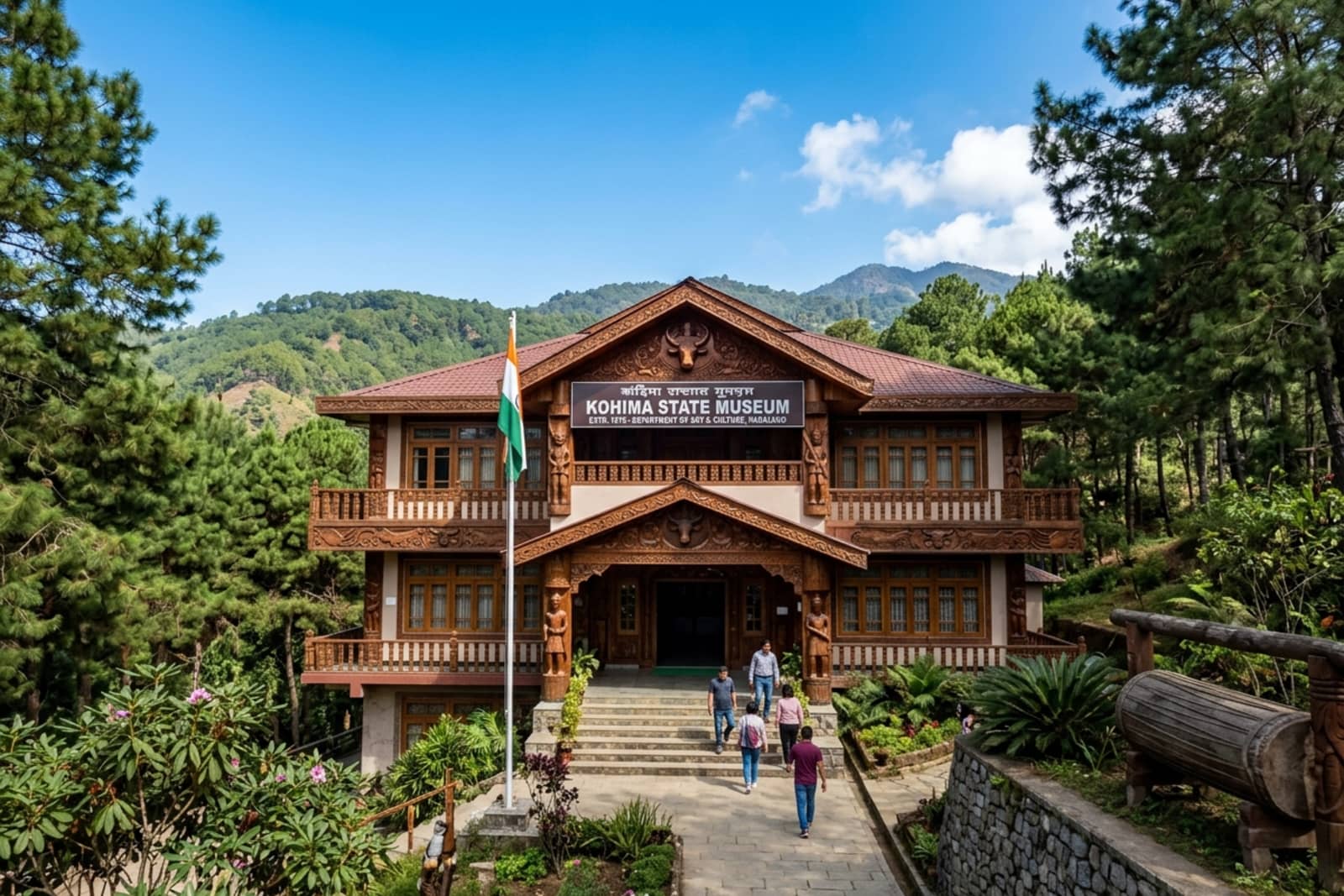
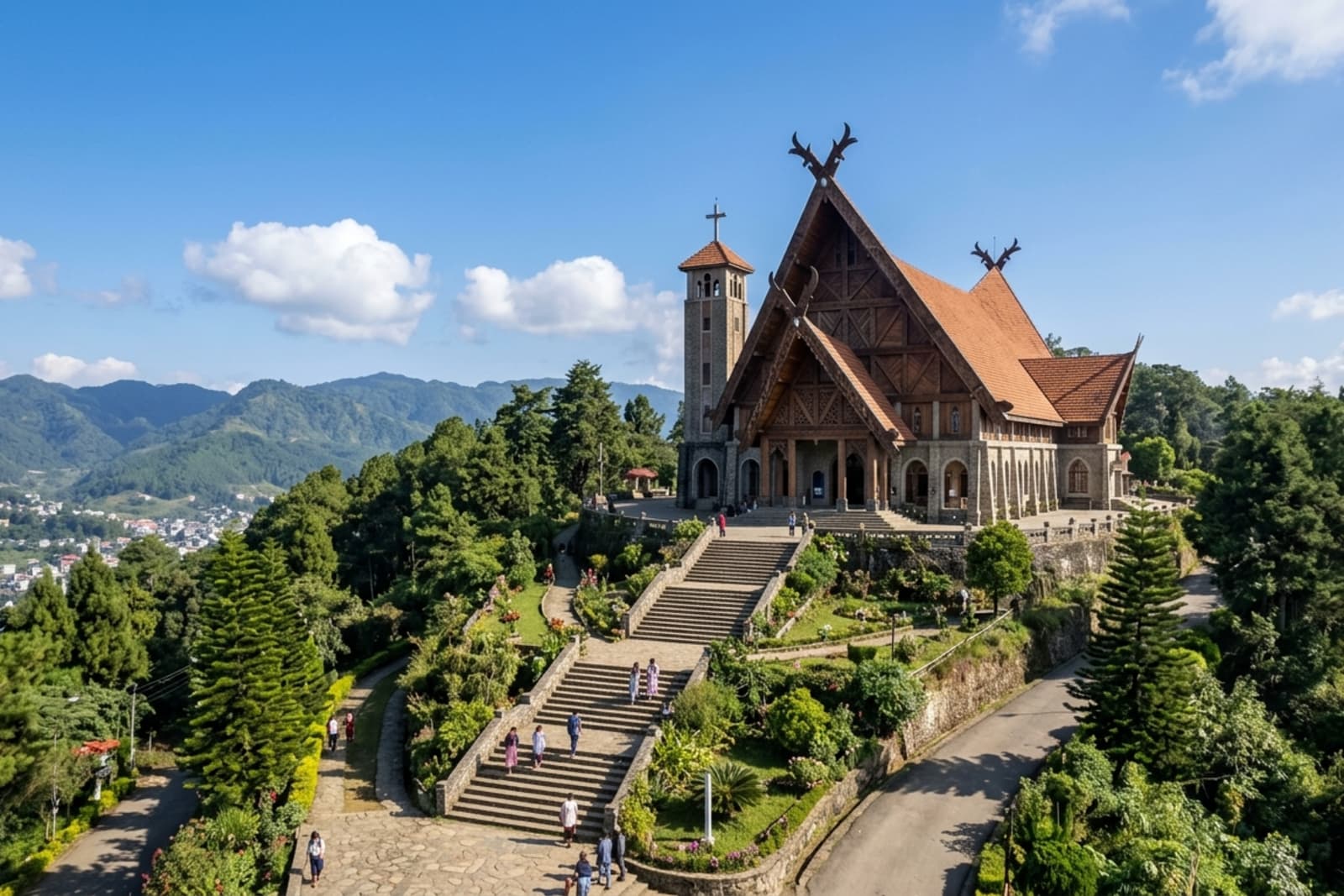
- Kohima War Cemetery: When you go home, tell them of us and say, for your tomorrow, we gave our today.
- Dzukou Valley: An emerald high-altitude sanctuary of rolling dwarf-bamboo hills, cold serpentine streams, and the endemic Dzukou Lily.
- Nagaland State Museum: Treasury of 16 Naga Tribes & Ancient Headhunting Heritage
- Catholic Cathedral Kohima: Seat of the Diocese of Kohima and home to Asia’s largest carved wooden crucifix.
How Many Days in Kohima?
Plan your own route — or let us handle everything

Things to Do in Kohima
Curated experiences and activities across Kohima by local experts
Where to Stay in Kohima
Verified stays in Kohima with local character


Getting Around
Safe, reliable transfers and car hire in Kohima
Practical Travel Realities & Local Tips
Terrain, ground rules, and essential preparation for Kohima
Kohima is classified as an Easy to Moderate highland destination for general cultural sightseeing, with Challenging trekking options in the surrounding mountain sanctuaries.
City Landmarks & Cultural Sites (Easy)
Primary cultural attractions within the city—including the Kohima War Cemetery, Mary Help of Christians Cathedral, Nagaland State Museum, and Kisama Naga Heritage Village—feature paved walkways, accessible terraces, and gentle steps suitable for travelers of all ages.
Kohima Village (Bara Basti) Exploration (Moderate)
Navigating the four ancestral *khels* of Kohima Village requires climbing steep hand-laid stone staircases, narrow cobblestone alleys, and hilly ramps. Comfortable walking shoes with good grip are recommended.
Dzukou Valley & Mount Japfu Treks (Moderate to Challenging)
High-altitude excursions into the surrounding ranges require solid physical stamina:
- Dzukou Valley Trek (2,452 m): The Viswema Route involves an 8 km motorable approach followed by a steep 45-to-60 minute stone staircase climb through rainforest to the ridge crest, transitioning into a gentle 2-hour valley walk. The Jakhama Route features a continuous, steep 3-to-4 hour stone stair ascent.
- Mount Japfu Summit (3,048 m): A strenuous 5-to-6 hour mountain climb ascending over 1,200 vertical meters through dense rhododendron and bamboo jungle. Requires an experienced local guide.
Local Culinary Traditions & Food
Authentic indigenous gastronomy, tribal flavours, and culinary culture in Kohima
The traditional food culture of Kohima is an authentic, ancestral culinary tradition defined by open woodfire smoke preservation, wild forest foraging, and distinctive microbial fermentation, completely free from commercial powdered spices or artificial additives. Meals are prepared around indoor hearths (*mezhü*) that serve as the thermal and social heart of every Angami home.
Signature Naga & Angami Dishes
- Galho: The quintessential Naga comfort dish—a wholesome, fragrant rice porridge simmered with indigenous unpolished red rice, tender seasonal wild greens (mustard leaves, mountain ginger, bitter herbs), and cured wood-smoked pork or seasoned lard. Vegetarian Galho prepared with fermented bamboo shoots and wild herbs is equally hearty and delicious.
- Smoked Pork with Axone (Akhuni): Tender strips of house-smoked pork braised with pungent fermented soybean paste (*axone*), fresh tomatoes, and fiery Naga King Chilli (Bhut Jolokia / Raja Mircha), delivering a profound savory umami depth.
- Bastenga (Fermented Bamboo Shoot) Broth: Shredded bamboo shoots naturally fermented in their own juices, braised with country chicken, river fish, or pork to create an invigorating, tart, and acidic clear broth.
- Naga Tree Tomato (Tamarillo) Chutney: Ripe tree tomatoes roasted over open embers, mashed with charred king chillies, raw mountain garlic, and fermented dry fish or roasted axone.
- Steamed Indigenous Greens: Boiled stinging nettles (*dzükhu*), wild fiddlehead ferns (*dhekia*), tender chayote squash (*iskut*), and yam leaves served with spicy dipping condiments.
- Zutho: Traditional Angami fermented rice brew crafted from sticky rice using herbal yeast starter cakes (*piezhu*). It is frothy, milky-white, slightly sweet and sour with a low ABV (~3–5%), traditionally served in carved bamboo tumblers.
Vegetarian Dining in Kohima
While meat is central to Naga cultural meals, vegetarian travelers will find plenty of satisfying options. Traditional Angami dining includes an abundance of fresh organic greens, bamboo shoot preparations, organic red rice, wild mushrooms, and lentils. Dedicated pure-vegetarian restaurants are also available in central Kohima along Main Town and PR Hill.
Combine Kohima With
Extend your trip with nearby destinations
Travel Guides
Expert guides for Kohima
Reviews
"Nezo Tours organized our fantastic trip. The team was attentive and flexible, accommodating last-minute changes to suit our needs."
Yamini Peter
Mumbai, Maharashtra
"We got the best service than expected. The guide was very friendly and very very helpful, throughout our journey he guided us."
Ammiel Shabong
Shillong, Meghalaya
"Service was excellent. Prices were the best compared to those offered by others. All in all a satisfying experience. Definitely recommended."
Pradeep Agarwal
Delhi, India
PLAN YOUR TRIP
FAQs
Can't find the answer you're looking for? Our expert travel team is always on hand to help you plan the perfect Kohima experience.
Ready to Explore Kohima?
Let our local experts help you plan the perfect trip. Get personalized recommendations and instant quotes.