
Shillong (Sohra Road Hub)
Updated 2026The Scotland of the East & Cultural Heart of Meghalaya
| Category | Detail |
|---|---|
| Altitude / Elevation | 1496m |
| Best Time to Visit | October to April |
| Coordinates | 25.5788° N, 91.8933° E |
| Distance from Guwahati | 98 km (3 hours via NH6) |
| Nearest Airport | Shillong Umroi Airport (SHL) - 30 km / Guwahati (GAU) - 98 km |
Shillong (Scotland of the East) is the capital locality of Meghalaya, located in the East Khasi Hills district at an altitude of 1,496 meters above sea level. Located 98 km south of Guwahati Airport, Shillong serves as the primary urban gateway, cultural heart, and commercial hub of Meghalaya, renowned for its rolling pine-covered hills, British-colonial architecture, vibrant music scene, and proximity to dramatic waterfall gorges.
The morning breeze sweeps over the pine-clad hills of Shillong, carrying the scent of rain, damp earth, and pine needles. In the buzzing lanes of Police Bazaar, tea stalls steam with hot red tea (Sha Saw) while colonial-era churches stand serene against rolling mist.
No Inner Line Permit (ILP) required for Indian citizens visiting Meghalaya. Foreign nationals must carry valid passports and Indian visas.
Geography, Topography & Plateau Geology
Shillong is the capital locality of Meghalaya, situated in the East Khasi Hills district at an altitude of 1,496 meters (4,908 feet) above sea level on the central Meghalayan plateau. Perched 98 km south of Guwahati along National Highway 6 (NH6), Shillong rests between the high mountain ridge of Shillong Peak (1,965 meters) to the south and the rolling pine-forested plateaus of Upper Shillong to the west.
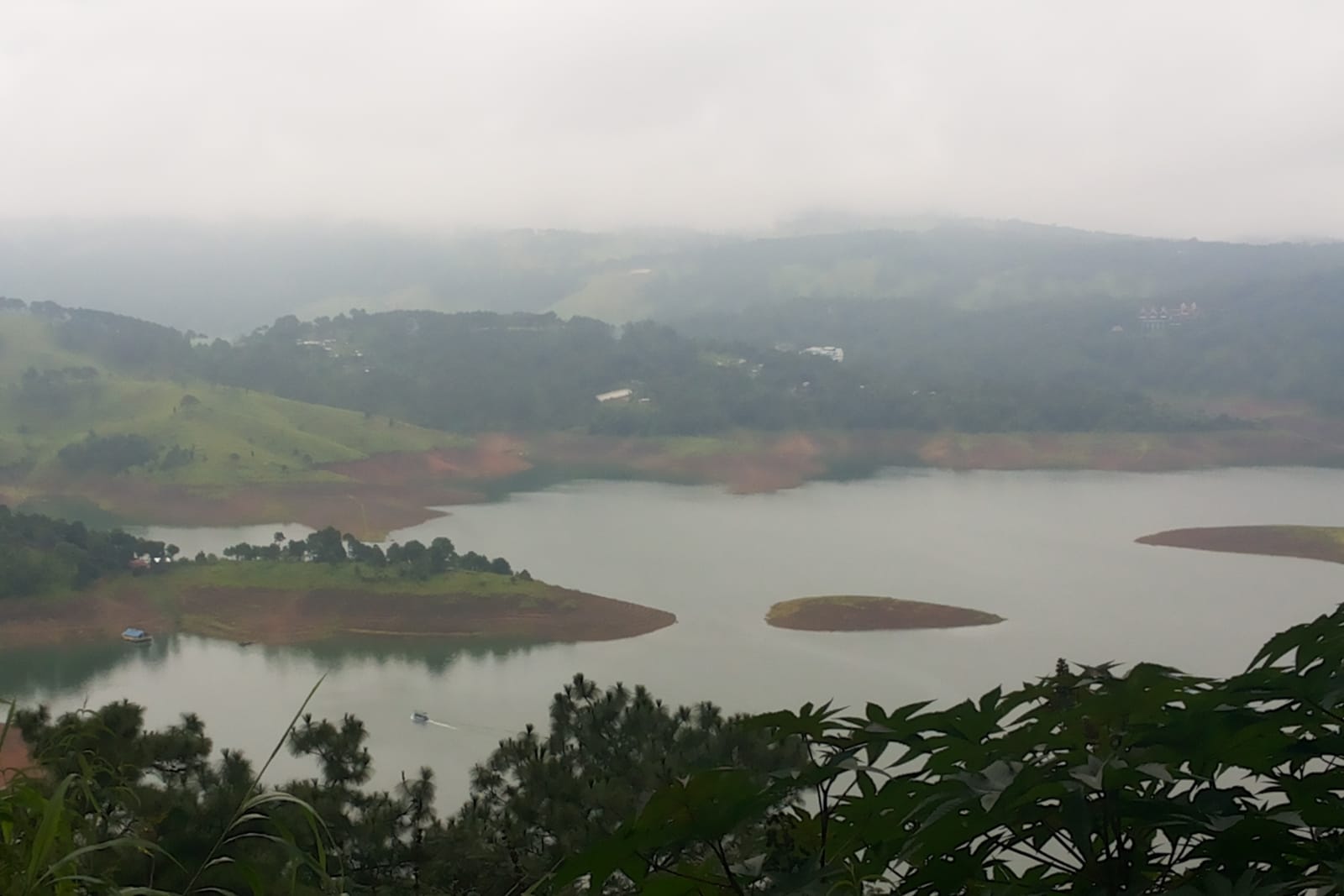
The town's topography is defined by rolling hills, natural pine groves (Pinus kesiya), and clear highland streams—including the Wah Umkhrah and Umshyrpi rivers—which flow into the expansive Umiam Lake (Barapani) 15 km north of the city. The geological foundation consists of ancient Precambrian granites and metamorphic schists of the Shillong Group, forming a stable highland plateau overlooking the Brahmaputra Valley to the north and the Surma Valley to the south.
Shillong enjoys a subtropical highland climate (Cwb). Summer temperatures from April to June remain mild between 15°C and 24°C, while winter temperatures from December to February range between 4°C and 16°C. Annual rainfall averages 3,300 mm, with the vast majority falling during the Southwest Monsoon from June to September.
Colonial History & British Heritage
Established in 1864 as a civil station by the British East India Company, Shillong grew rapidly due to its cool highland climate. In 1874, it was named the administrative headquarters of the newly formed Chief Commissioner's Province of Assam. British colonial officers nicknamed Shillong the "Scotland of the East" because its misty pine slopes, cool climate, and rolling topography reminded them of the Scottish Highlands.
Colonial legacy lives on in Shillong's distinctive "Assam-type" architecture—timber-framed, single or double-story structures with bamboo-reed plastered walls (Ikra), high-pitched corrugated iron roofs, and wooden verandas designed specifically to withstand regional seismic tremors and torrential rainfall. Notable heritage landmarks include:
- All Saints Cathedral: Built in 1902 with dark timber framing and stained-glass windows, replacing an earlier structure destroyed in the Great 1897 Assam Earthquake.
- Ward's Lake (Nan Polok): A horseshoe-shaped artificial lake excavated in 1894 under Sir William Ward, featuring a signature wooden footbridge, manicured botanical gardens, and weeping willow trees.
- Pinewood Hotel: Established in the late 19th century as the region's first British hotel, showcasing classic colonial timber architecture set amidst pine lawns.
- State Central Library & Assembly Hall: Colonial-era stone structures located near Ward's Lake, housing historical archives of the Northeast Frontier Agency (NEFA).
Khasi Culture & Matrilineal Heritage
Shillong is the cultural capital of the Khasi people, an indigenous Mon-Khmer speaking community. Khasi society is celebrated globally for its matrilineal social organization, where ancestral lineage and family property pass down through the female line, with the youngest daughter (Ka Khadduh) acting as the primary custodian of the family home and religious ancestral heirlooms.
Traditional Khasi social life revolves around the Dorbar Shnong (locality council), headed by a Rangbah Shnong (headman), ensuring community self-governance and civic order. The annual Nongkrem Dance Festival (Ka Pomblang Nongkrem), held every autumn at nearby Smit (15 km from Shillong), is the supreme cultural festival of the Khasi people, featuring traditional dances performed by unmarried Khasi maidens adorned in gold crowns and silk Dhara, alongside young men carrying sword shields.
In addition to traditional festivals, Shillong is renowned as the "Rock Capital of India", boasting a legendary Western music heritage. Decades of choir singing in local churches, live acoustic performances in Laitumkhrah cafes, and annual international rock concerts have fostered generations of world-class musicians and a vibrant live music culture.
Key Landmarks & Neighborhood Guide
- Police Bazaar (Khyndailad): The buzzing commercial heart of Shillong, featuring pedestrian shopping streets, traditional handicraft emporiums, local Khasi food stalls, and transport hubs.
- Elephant Falls (Ka Kshaid Lai Pateng Khohsiew): Located 12 km south of Shillong, a famous three-tiered waterfall cascading down dark fern-covered rock faces. Named by the British after an elephant-shaped rock destroyed in the 1897 earthquake.
- Shillong Peak (U Lum Shyllong): At 1,965 meters, the highest point in Meghalaya, offering sweeping 360-degree vistas across Shillong city and the surrounding Khasi Hills. Home to a sacred Khasi forest deity shrine.
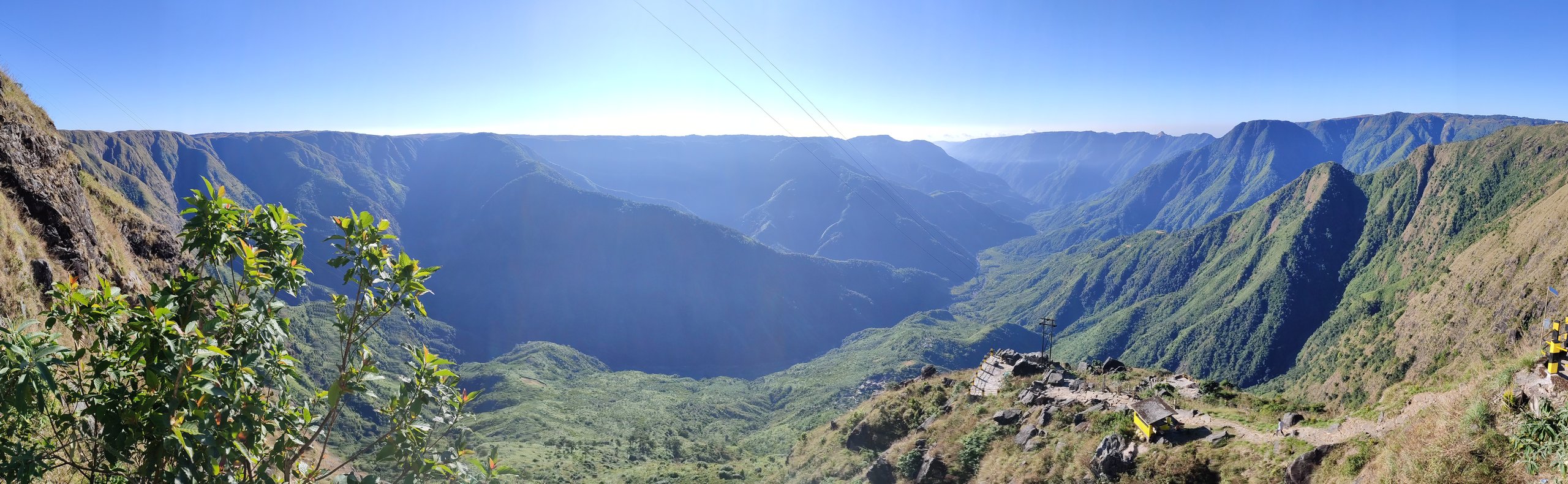
- Laitlum Canyons: Situated 23 km east of Shillong, a dramatic cliff edge offering sheer drop-offs into deep green gorges and Rasong village below.
- Don Bosco Centre for Indigenous Cultures (DBCIC): A world-class 7-story museum in Mawlai showcasing the ethnology, attire, weapons, and heritage of all 8 Northeast Indian states.
- Mawphlang Sacred Grove (Law Kyntang): Located 25 km southwest of Shillong, a 700-year-old ancient forest protected by strict Khasi animist taboos forbidding the removal of any leaf, branch, or stone. Home to ancient monolith sacrifice altars, rare orchids, and medicinal flora.
- Shillong Golf Course: Established in 1898 as a 9-hole course and expanded to 18 holes in 1924, this natural undulating pine-tree lined course is often called the "Gleneagles of the East".
How to Reach & Transit Logistics
- By Air: Guwahati Airport (GAU), located 98 km away, is the primary aviation hub with daily non-stop flights from Delhi, Mumbai, Kolkata, and Bengaluru. Shared and private cabs operate 24/7 (3 to 3.5 hours via NH6). Shillong Umroi Airport (SHL), 30 km north, offers regional ATR flights from Kolkata and Guwahati.
- By Train: Guwahati Railway Station (GHY), 95 km north, is the nearest major railhead. Shared Sumos (₹250-₹300/seat) and private taxis connect directly from Paltan Bazaar to Police Bazaar in Shillong.
- By Road: The 4-lane National Highway 6 (NH6) connects Guwahati to Shillong, passing scenic Umiam Lake. Regional mountain highways connect Shillong south to Sohra/Cherrapunji (54 km / 1.5 hours), Dawki (82 km / 2.5 hours), and east to Jowai (66 km / 2 hours).
Local Food Culture & Culinary Traditions
Dining in Shillong offers an authentic taste of indigenous Khasi cuisine alongside colonial cafe culture:
- Jadoh: Fragrant local hill rice cooked with pork or chicken, local ginger, and subtle spices.
- Dohneiiong: Tender pork braised in a rich, dark sauce of roasted black sesame seeds (Nei-Iong) and ginger.
- Tungrymbai: Fermented soybean paste sautéd with ginger, garlic, green chilies, and pork fat.
- Sha Saw & Puitaro: Traditional red tea (Sha Saw) served hot with steamed ground rice cakes (Puitaro) at local tea stalls in Iewduh market.
- Dohkhlieh: A refreshing local Khasi salad prepared with boiled pork, finely diced onions, green chilies, and local ginger, sometimes topped with pig brain dressing.
Practical Travel Guide (The Honest Guide)
- Traffic Realities: Traffic congestion around Police Bazaar, Bara Bazaar, and Upper Shillong can be heavy during peak morning and evening hours (8:30 AM–10:30 AM and 4:30 PM–7:00 PM). Plan city movement around mid-day windows or hire local Maruti 800 black-and-yellow taxis for quick inner-city hops.
- Cash & ATMs: ATMs are abundant in Shillong city center (Police Bazaar, Laitumkhrah). However, digital UPI payments can fail in deep canyon areas like Laitlum or Mawphlang; carry physical cash for taxi fares and local site passes.
- Mobile Connectivity: Jio and Airtel offer excellent 4G and 5G speeds throughout Shillong city, while BSNL provides steady rural backup.
- Permit Rules: NO Inner Line Permit (ILP) is required for Indian citizens visiting Shillong or anywhere in Meghalaya. Foreign nationals must carry valid passports and Indian tourist visas.
Microclimates, Rainfall Dynamics & Seasonal Windows
Shillong's geography creates distinct local microclimates across its urban and suburban ridges. Positioned on the leeward side of the Shillong Peak range, the main city receives significantly less rainfall than Cherrapunji (3,300 mm annually versus Cherrapunji's 11,777 mm). High-altitude neighborhoods like Upper Shillong (1,700 meters) and Elephant Falls experience thick morning fog and lower temperatures, while lower valleys near Umiam Lake (1,000 meters) enjoy warmer, sunnier afternoons.
- Autumn & Winter (October to February): Crisp blue skies, dry hiking trails, and daytime temperatures ranging between 12°C and 18°C. Mid-November features the Shillong Cherry Blossom Festival, when pink Himalayan cherry blossoms (Prunus cerasoides) bloom across Ward's Lake and Golf Links.
- Spring (March to April): Mild weather (16°C to 24°C), lush garden growth, and ideal conditions for day trips to Laitlum Canyons and Dawki.
- Monsoon Season (May to September): Frequent heavy showers and misty mountain clouds. Waterfalls like Elephant Falls and Bishop-Beadon Falls surge with roaring water volumes, surrounded by rain-washed green hills.
Sustainable Tourism, Local Etiquette & Community Conservation
As the primary tourism gateway of Meghalaya, Shillong balances rapid urban development with ancient Khasi environmental stewardship:
- Respect Matrilineal & Local Traditions: When interacting with local business owners and homestay hosts, observe Khasi customs of quiet politeness. Avoid aggressive bargaining in traditional markets like Iewduh.
- Eco-Decorum & Plastic Management: Dispose of waste strictly in community bins. Refill water bottles at homestays rather than discarding single-use plastic bottles along waterfall trails.
- Sacred Forest Protocol: At nearby sacred groves such as Mawphlang, strictly follow the traditional Khasi mandate: Take nothing from the forest, leave nothing behind. Removing leaves, twigs, stones, or flowers from sacred groves is forbidden in indigenous lore.
- Guided Transfers: Nezo Tours provides dedicated private transfers from Guwahati Airport (GAU) and Railway Station directly to Shillong hotels, ensuring comfortable mountain transit with verified local drivers.
Shillong earned the nickname "Scotland of the East" and is India's rock music capital, hosting the annual Cherry Blossom Festival.
TRAVEL PLANNING
Plan Your Visit
Essential guides to prepare for your trip
Itineraries & Trips
Curated 3-day, 5-day & 7-day trip routes
Places to Visit
Top waterfalls, viewpoints & landmarks
Best Time to Visit
When to go for the best experience
How to Reach
Flights, trains, taxis and road options
Where to Stay
Homestays, eco-lodges & resorts
Festivals & Events
Cultural celebrations & seasonal events
Shillong Tour Packages
Ready-to-book Shillong tours
Need a Custom Plan?
As Northeast India locals, we work directly with our trusted community drivers and homestay hosts.
Talk to an ExpertTOP ATTRACTIONS
Places to Visit in Shillong
Must-see attractions and hidden gems across Shillong


.jpg)


- Umiam Lake: The Majestic Barapani
- Elephant Falls: Three-tiered cascade of Ka Kshaid Lai Pateng Khohsiew.
- Ward's Lake: A historic pine-ringed lake and botanical sanctuary in the heart of Shillong.
- Police Bazaar: Bustling City Hub
- Don Bosco Museum: A world-class anthropological journey through the tribal heritage of Northeast India.
- Shillong Golf Course: Gleneagles of the East.
- Cathedral of Mary Help of Christians: Explore the beauty of Cathedral of Mary Help of Christians in Shillong.
- Shillong City: The scenic Scotland of the East.
- Air Force Museum, Shillong: Military heritage and historic aircraft in Upper Shillong.
- All Saints Cathedral, Shillong: A colonial Tudor-style timber church built after the 1897 earthquake.
- Lady Hydari Park: Historic central park and mini-zoo
- Cathedral of Mary, Shillong: A Gothic-style cathedral built to withstand earthquakes.
How Many Days in Shillong?
Plan your own route — or let us handle everything
Things to Do in Shillong
Curated experiences and activities across Shillong by local experts
Where to Stay in Shillong
Verified stays in Shillong with local character



Getting Around
Safe, reliable transfers and car hire in Shillong
Practical Travel Realities & Local Tips
Terrain, ground rules, and essential preparation for Shillong
Shillong is an Easy to Moderate highland destination situated at 1,496 meters elevation. Urban sights like Ward's Lake and Police Bazaar feature gentle paved walkways accessible to all age groups. Excursions to Laitlum Canyons involve walking along grassy cliff edges or descending the 3,000-step stone trail to Rasong village for advanced trekkers.
Local Culinary Traditions & Food
Authentic indigenous gastronomy, tribal flavours, and culinary culture in Shillong
Shillong's culinary culture highlights authentic Khasi dishes cooked with minimal oils, fresh mountain herbs, and roasted black sesame paste. Must-try local specialties include Jadoh (red rice braised with pork or chicken and ginger), Dohneiiong (tender pork braised in black sesame gravy), Tungrymbai (fermented soybean dish with minced pork), Dohkhlieh (fresh Khasi pork salad), and Sha Saw (hot red tea served with traditional steamed rice pastries like Pukhlein and Pu-Tharo).
Combine Shillong With
Extend your trip with nearby destinations
Travel Guides
Expert guides for Shillong
Reviews
"Shillong exceeded my expectations. The Scotland of the East nickname is well-earned. Nezo's local Khasi guide made the experience authentic."
Emma Watson
Manchester, UK
"Ward's Lake and Police Bazaar were lovely. Nezo arranged a comfortable stay and a great itinerary covering all Shillong highlights."
Arun Nair
Mumbai, Maharashtra
"Shillong Peak at sunrise was unforgettable. The view stretching to Bangladesh was incredible. Nezo's driver arrived promptly at 5 AM."
Mei Ling
Kuala Lumpur, Malaysia
PLAN YOUR TRIP
FAQs
Can't find the answer you're looking for? Our expert travel team is always on hand to help you plan the perfect Shillong experience.
Ready to Explore Shillong?
Let our local experts help you plan the perfect trip. Get personalized recommendations and instant quotes.